


2167th BLOG POST
9th
Book of 2026
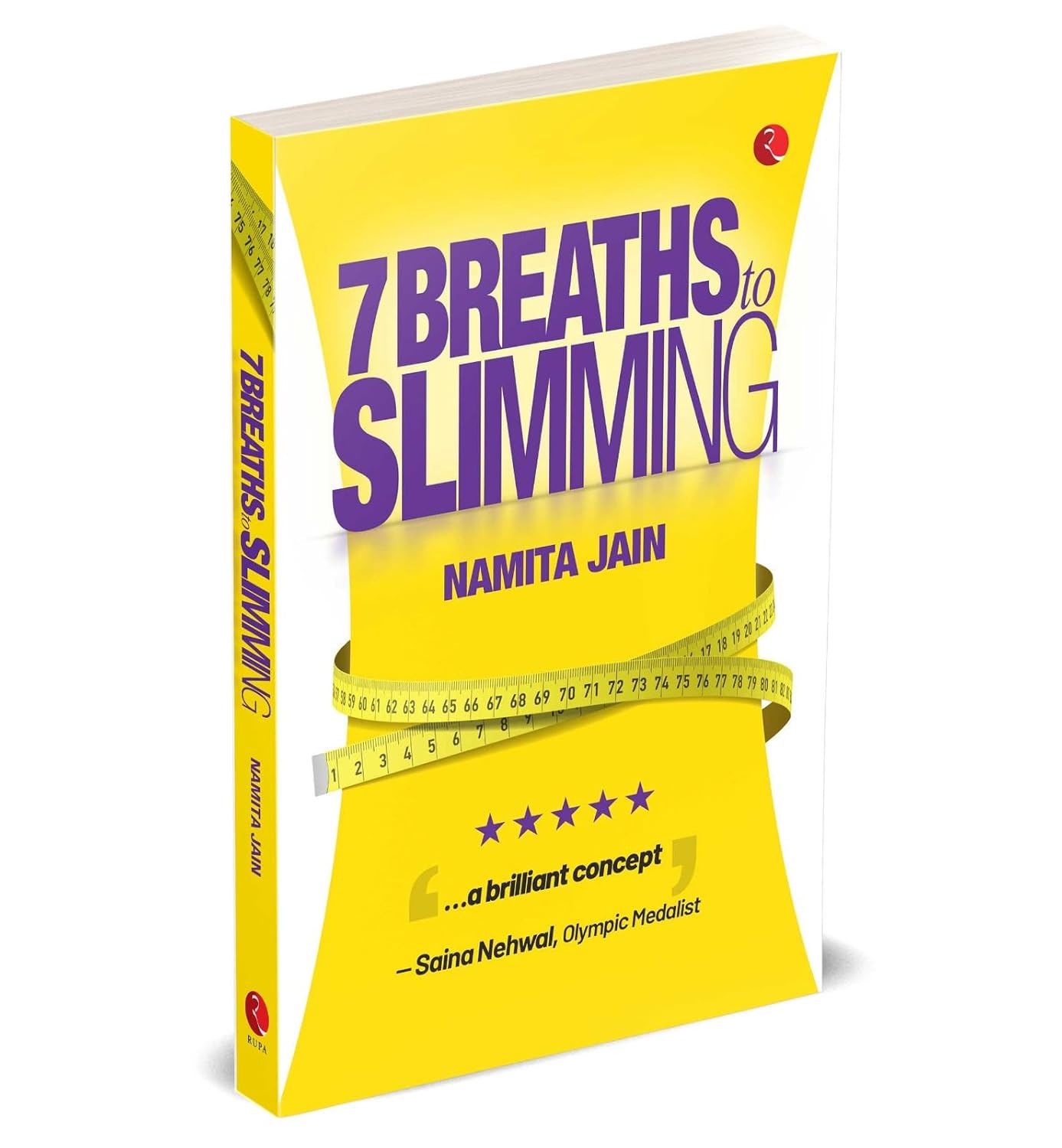
There
are phases in life when we make a certain thing our top priority. For the last
2–3 months, I have been trying my best to reduce my weight and eat as little
junk food as possible. This effort resulted in a significant weight loss of 7
kgs within two months, which is actually very difficult to achieve considering
the amount of easily accessible food we keep consuming without moderation. This
phase of my life made me pick up Dr. Namita Jain’s latest book, published by
Rupa Publications, titled “7 Breaths to Slimming.”
This
232-page book is written in a manner where you do not need to sit with notes in
your hand, constantly noting what to eat or avoid, which exercises to perform,
or how many times they should be done in a day or week. Instead, it presents a
simple methodology based on the concept of breathing before eating. The idea is
to disconnect from your current emotions and state of mind, enter a more
mindful space, and understand how much you truly need to consume versus how
much your anxiety and the fast-paced world are pushing you to eat.
The
book is divided into five sections: Laying the Foundation, How the 7
Breaths to Slimming Works, The Result-Oriented Path for the Journey to
Slimming Success, Sustaining the Transformation, and The Path
Forward in the Journey of Slimming. These sections are further broken down
into smaller chapters where the author repeatedly discusses the power of the
seven-breath technique, which helps connect the mind with food and encourages
mindful eating. She also regularly shares testimonials from some of her clients
and acquaintances regarding the results and mindset shifts they experienced
after following this method.
Namita’s
intention is very clear from the structure and narration of the book. She does
not want to overwhelm readers with countless parameters and complicated methods
for weight loss. Instead, she chooses to focus entirely on the transformative
impact that a breathing cycle can have in regulating food consumption. Readers
are introduced to the ritual of “Pause, Breathe, and Align” every time they sit
down for a meal. To ensure people do not feel awkward practising this in
public, she also suggests alternative three-breath cycles and explains how they
can be done discreetly without drawing attention.
The
book remains strongly focused on this one methodology. However, having read
several books on dieting, health, and body management, I personally felt that
the content delivered was relatively limited considering the number of pages
used to explain a single concept. The same volume of writing could have
included multiple additional techniques and approaches that might have
benefited readers even more. At times, I felt that the core idea of the book
could have been comfortably covered within a detailed Medium article or a
couple of blog posts instead of a full-length book.
There
are also several scientific aspects related to breathing exercises and the
physiological changes they bring about in the body that could have been
explained in greater detail. Including these would have made the concept feel
more holistic and convincing from both a practical and scientific perspective.
Unfortunately, that aspect has largely been left unexplored in the book.
Overall,
I believe the book addresses a very important topic and introduces a mindful
approach towards eating, but it offers comparatively less content for a book
priced at an MRP of INR 395. I give this book 3 stars out of 5.
Thanks!
WRITING BUDDHA


