


2149th BLOG POST
16th Book of 2025
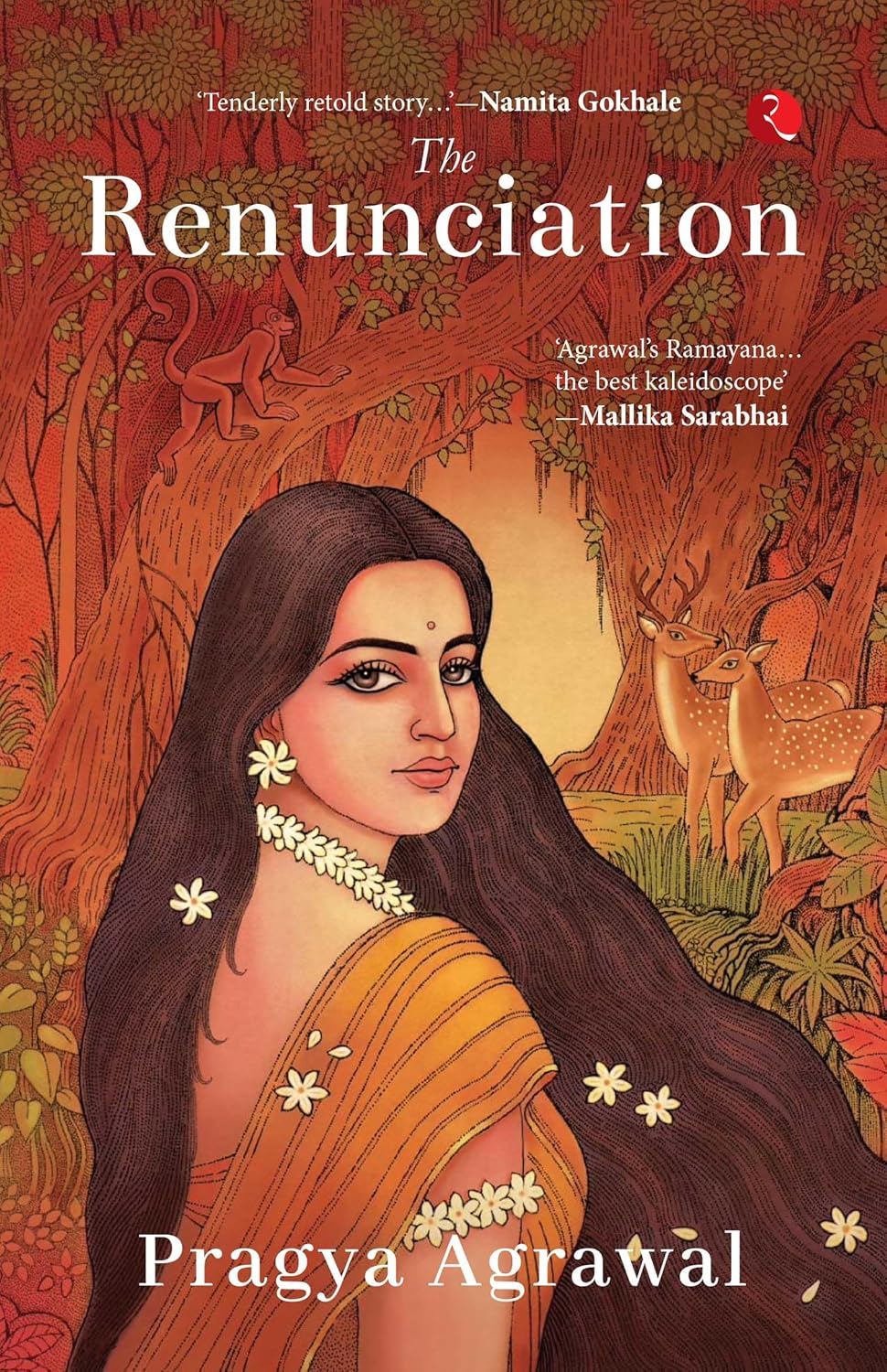
Mythological
retellings have become increasingly popular in recent years, but very few
manage to strike a balance between reverence for the original text and a fresh,
emotionally engaging perspective. The Renunciation by Pragya Agrawal
succeeds in doing exactly that. Instead of retelling the Ramayana in its
entirety, the book chooses to focus on one of its most painful yet profound
chapters—Sita’s life after her exile, her motherhood, and her ultimate choice
of dignity over belonging.
The
story unfolds in the serene surroundings of Sage Valmiki’s hermitage, where
Sita lives with her twin sons, Luv and Kush. Far removed from the grandeur of
Ayodhya and the noise of royal expectations, this setting allows the reader to
see Sita not as a divine symbol, but as a deeply human woman—one who loves
fiercely, remembers painfully, and carries silence as both shield and strength.
The author beautifully captures the emotional stillness of this phase of Sita’s
life, making the forest almost a character in itself.
What
stands out most in this retelling is the way Sita’s inner world is portrayed.
Her suffering is not dramatized unnecessarily, nor is it reduced to victimhood.
Instead, it is presented as lived experience—layered with love, disappointment,
courage, and unwavering self-respect. The scenes between Sita and her sons are
particularly touching. Her maternal instincts, her protectiveness, and her
quiet fear of the truth one day surfacing are written with great sensitivity.
These moments give the book its emotional core.
The
narrative gains further depth when Valmiki teaches Luv and Kush to sing the
Ramayana, unknowingly narrating the life story of their own parents. This irony
is handled with subtlety, allowing readers to feel Sita’s internal conflict
without overt exposition. The past, which she has carefully sealed away, slowly
begins to resurface—forcing her to confront memories she never truly escaped.
What
I appreciated most about The Renunciation is that it does not attempt to
judge the epic or its characters. Lord Ram is not diminished, nor is Sita
elevated through comparison. Instead, the book gently highlights the emotional
gaps within the larger narrative—spaces where Sita’s voice was often unheard.
Her final act of renunciation is portrayed not as defeat, but as a conscious,
powerful choice—one rooted in self-worth and inner clarity. The few pages are
very emotional and once the book ended, it wasn’t easy for me to keep it aside
and forget. It took me lot of days to come in terms with it.
Talking
about few drawbacks, I feel that the sections of the story have been
over-described which makes it boring to read the complete sentences at times
and you feel like skipping few lines because they don’t take the story further.
Similarly, I feel that there is lot to Sita’s character which could have been
explored but kept away from the scope of the book which makes the readers feel
incompleteness to her complete journey.
Overall,
The Renunciation is a thoughtful, emotionally resonant retelling that
invites readers to pause and reflect. It is less about spectacle and more about
silence, endurance, and the courage it takes to let go. For readers who enjoy
mythology told through introspection rather than grandeur, this book is a
rewarding and memorable read. I’ll give this book 3.75* out of 5.
Thanks
WRITING
BUDDHA


0 CoMMenTs !!! - U CaN aLSo CoMMenT !!!:
Post a Comment