14 December 2025 | By: Writing Buddha

The Renunciation by Pragya Agrawal (Book Review: 3.75*/5) !!!

2149th BLOG POST

16th Book of 2025
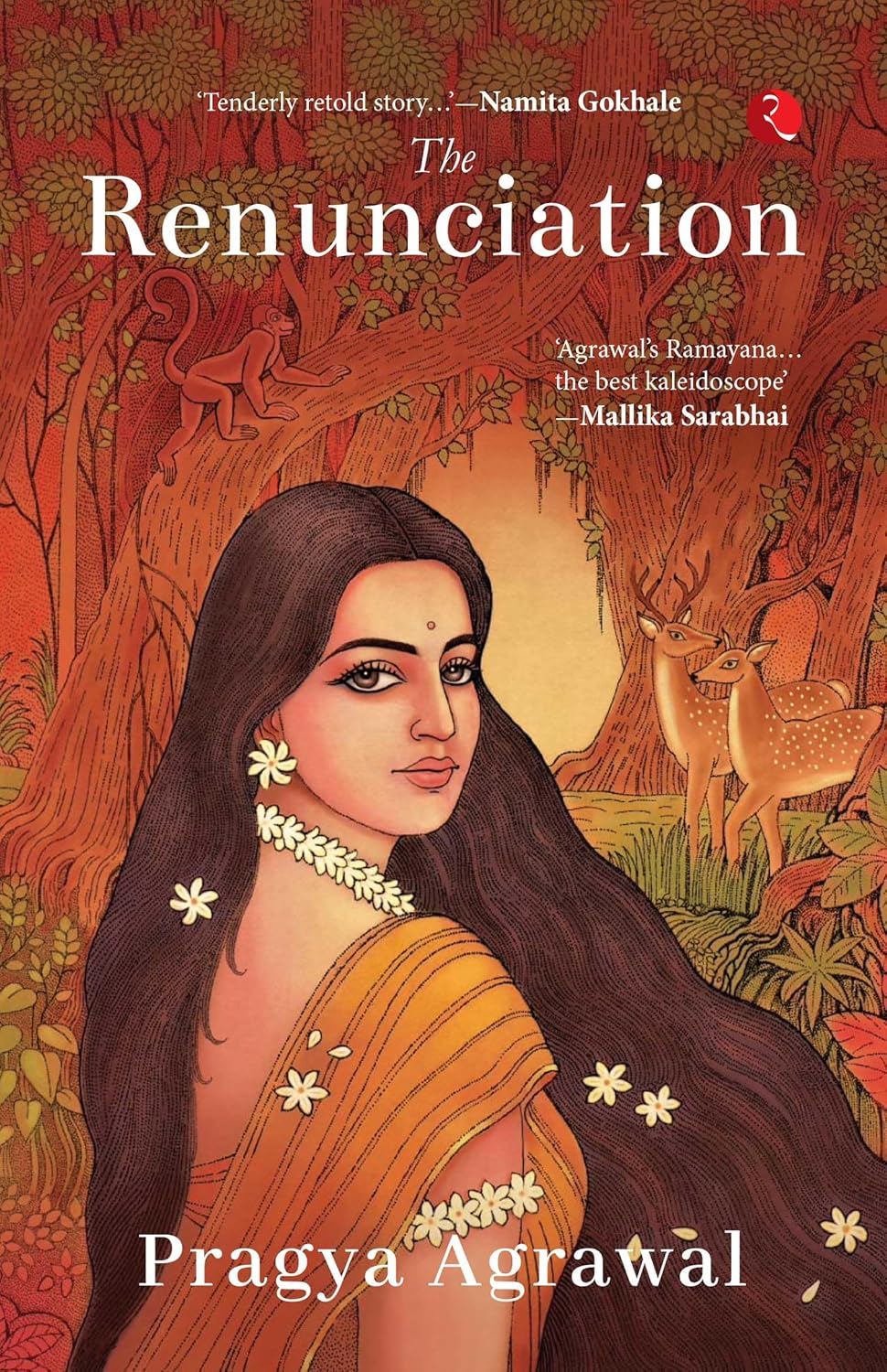
Mythological retellings have become increasingly popular in recent years, but very few manage to strike a balance between reverence for the original text and a fresh, emotionally engaging perspective. The Renunciation by Pragya Agrawal succeeds in doing exactly that. Instead of retelling the Ramayana in its entirety, the book chooses to focus on one of its most painful yet profound chapters—Sita’s life after her exile, her motherhood, and her ultimate choice of dignity over belonging.


The story unfolds in the serene surroundings of Sage Valmiki’s hermitage, where Sita lives with her twin sons, Luv and Kush. Far removed from the grandeur of Ayodhya and the noise of royal expectations, this setting allows the reader to see Sita not as a divine symbol, but as a deeply human woman—one who loves fiercely, remembers painfully, and carries silence as both shield and strength. The author beautifully captures the emotional stillness of this phase of Sita’s life, making the forest almost a character in itself.


What stands out most in this retelling is the way Sita’s inner world is portrayed. Her suffering is not dramatized unnecessarily, nor is it reduced to victimhood. Instead, it is presented as lived experience—layered with love, disappointment, courage, and unwavering self-respect. The scenes between Sita and her sons are particularly touching. Her maternal instincts, her protectiveness, and her quiet fear of the truth one day surfacing are written with great sensitivity. These moments give the book its emotional core.


The narrative gains further depth when Valmiki teaches Luv and Kush to sing the Ramayana, unknowingly narrating the life story of their own parents. This irony is handled with subtlety, allowing readers to feel Sita’s internal conflict without overt exposition. The past, which she has carefully sealed away, slowly begins to resurface—forcing her to confront memories she never truly escaped.


What I appreciated most about The Renunciation is that it does not attempt to judge the epic or its characters. Lord Ram is not diminished, nor is Sita elevated through comparison. Instead, the book gently highlights the emotional gaps within the larger narrative—spaces where Sita’s voice was often unheard. Her final act of renunciation is portrayed not as defeat, but as a conscious, powerful choice—one rooted in self-worth and inner clarity. The few pages are very emotional and once the book ended, it wasn’t easy for me to keep it aside and forget. It took me lot of days to come in terms with it.


Talking about few drawbacks, I feel that the sections of the story have been over-described which makes it boring to read the complete sentences at times and you feel like skipping few lines because they don’t take the story further. Similarly, I feel that there is lot to Sita’s character which could have been explored but kept away from the scope of the book which makes the readers feel incompleteness to her complete journey.


Overall, The Renunciation is a thoughtful, emotionally resonant retelling that invites readers to pause and reflect. It is less about spectacle and more about silence, endurance, and the courage it takes to let go. For readers who enjoy mythology told through introspection rather than grandeur, this book is a rewarding and memorable read. I’ll give this book 3.75* out of 5.

 PURCHASE THE BOOK HERE

Thanks

WRITING BUDDHA


The Four Avengers Versus the Elephant: Two Tales from the Panchatantra by Meena Arora Nayak (Book Review: 4*/5) !!!

2148th BLOG POST 

15th Book of 2025

Reading children’s books can be quite interesting when you want to read something light while having tea or coffee at someone’s home—especially when they have kids for whom such books have been purchased. I took advantage of a similar opportunity and read a book titled “The Four Avengers Versus the Elephant” published by Aleph. The book consists of two tales from the Panchatantra, retold by Meena Arora Nayak.


The book is meant for children above the age of nine, as the author has ensured that even though her stories are targeted at kids, they are written in a way that imparts knowledge beyond the basics. I, as someone in my mid-30s, could also find wisdom in the way these stories are narrated. Nayak uses conversations between animals as a medium to deliver life lessons and Chanakya-like insights. Many dialogues are written in a manner that resembles explanations of ancient Sanskrit shlokas.


The first story focuses on the qualities and responsibilities of a king. Within the same tale, the author highlights how a vulnerable animal like a hare can outsmart a mighty lion who is ready to kill and eat him. The way the hare leads the lion to his own death is told very intelligently and gives hope to anyone who considers themselves weaker than others.


Similarly, the second story narrates how four small animals and insects unite to defeat an elephant who had been troubling one of their friends. This story beautifully signifies how the power of unity can bring even the most powerful to their knees.


Overall, I loved reading this book. I rate it 4 stars out of 5. I just feel that children’s books like this shouldn’t be priced as high as they often are — hopefully, publications can find a way to make them more affordable.

 PURCHASE THE BOOK HERE

Thanks!


WRITING BUDDHA

Birbal Goes to Persia: Four Tales of Akbar and Birbal by Delshad Karanjia (Book Review: 4*/5) !!!

2147th BLOG POST

14th Book of 2025 

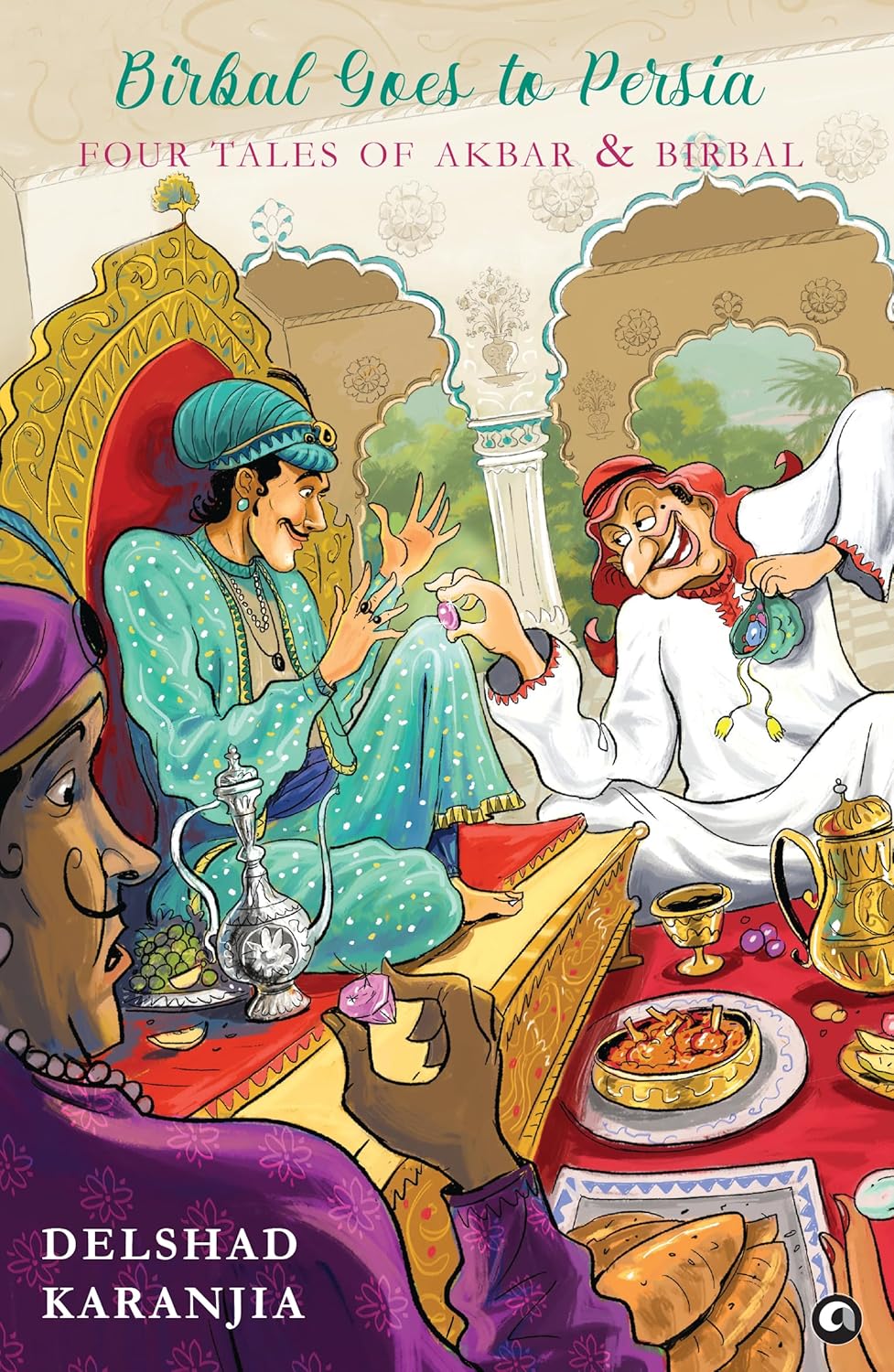
I remember my father instilling the habit of reading books in me right from my primary schooling days. One of the most popular stories during those years was the Akbar-Birbal tales. I used to think that kids these days wouldn’t be reading about Akbar and Birbal, but I was pleasantly surprised when I found a few such books at one of my relatives’ homes. It took me just 20 minutes to complete this book titled “Birbal Goes to Persia,” which consists of four tales of Akbar and Birbal — all distinct from each other. The stories have been retold by Delshad Karanjia, who has been a journalist by profession.


All the stories are witty, funny, and humorous, and each provides a life lesson at the end. The first story in the book, A Lesson for the Emperor, tells a tale where Birbal gives a profound lesson to Akbar, making him realize that everything in life is temporary and that worldly possessions do not belong to anyone permanently, as every person is merely passing through Earth and must die one day.


The second story, Birbal and the Shah, is another example of Birbal’s cleverness, where he manages to impress both his own king as well as the ruler of another country by complimenting each of them in their respective presence — changing the perspective of his statements in both instances.


The third story, Catching Thieves, actually tells two different tales where Birbal faces the challenging task of finding a thief. He uses his intelligence and gives a task to the suspects, through which he cleverly identifies the real thief without conducting any formal investigation.


The fourth story, A Tax on Fools, serves as a fitting conclusion to the book. It narrates how Birbal challenges Akbar’s idea of imposing a tax on fools and, in turn, proposes imposing a tax on wise people instead. This was the first time I read this particular story, and I really liked it.


Overall, the book is engaging, and children are definitely going to enjoy it. I give it 4 stars out of 5.

PURCHASE THE BOOK HERE

Thanks!


WRITING BUDDHA