


2161st BLOG POST
3rd Book of 2026
Whenever
life is not very pleasant, I try picking up a self-help book because there is
always one or a couple of insights that make it easier to move forward through
tough phases. Sometimes, even if the ideas are not new, a book presents them
differently, bringing the same old advice into a more productive and
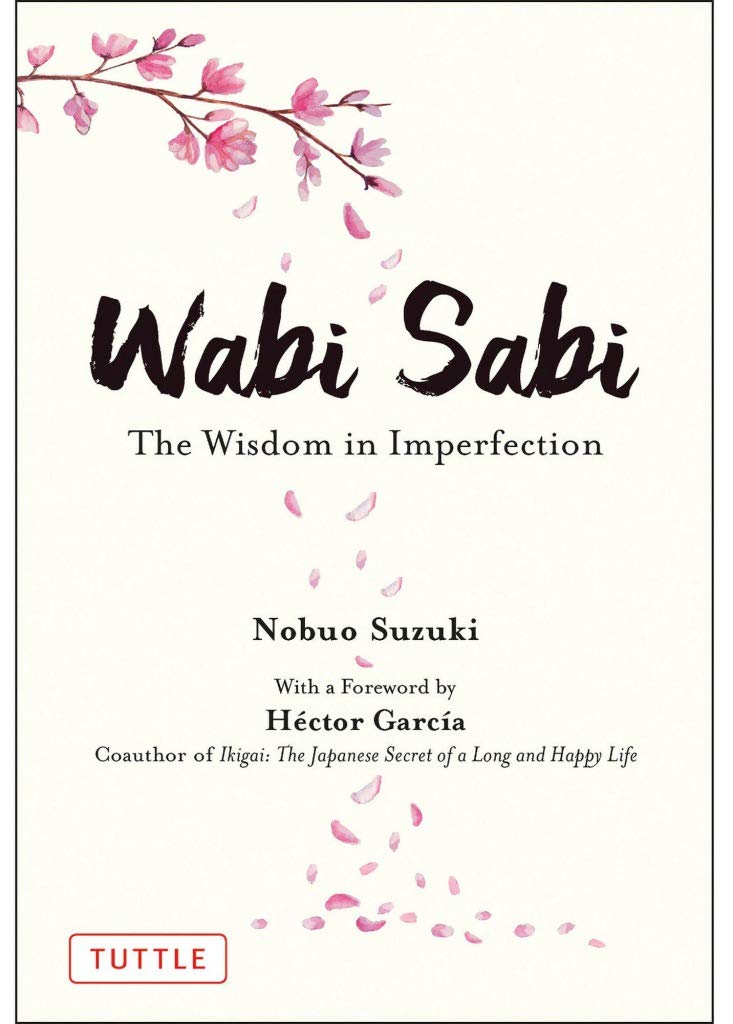
implementable perspective. Reading “Wabi Sabi” by the Japanese author
Nobuo Suzuki did exactly that for me. This 160-pages hardover book takes us
deep into one of the Japanese Zen philosophies, which also forms the title of
the book, meaning “The Wisdom in Imperfection.” The book carries a foreword by
none other than Hector Garcia, the co-author of another famous Japanese
bestseller, Ikigai.
The
author explains the individual meanings of the words Wabi and Sabi,
and what they represent when considered together. Taking us through different
interpretations, Nobuo emphasizes that it is about finding wisdom and beauty in
incompleteness, imperfection, the unfinished, and the impermanent. The book is
divided into three sections—The Philosophy of Wabi Sabi, Wabi Sabi in
Art, and Wabi Sabi as a Way of Life.
In
the first section, the author introduces Zen philosophy and Wabi Sabi briefly
before delving deeper. One chapter explains why we should not be too hard on
ourselves while chasing perfection, as the world conditions us to believe that
perfection is the ultimate goal. It highlights how, when we begin to accept our
own imperfections, we also learn to accept the imperfections of others. In
doing so, the world becomes slightly more bearable and empathetic.
The
author further discusses relationships, explaining how expectations can often
lead to disappointment. Everyone is living life according to their own timeline
and vision; comparison and expectation only complicate relationships
unnecessarily.
In
the chapter on drawing inspiration from nature, the author explains how nature
is endless and rarely perfectly finished. Even ancient palaces often have a
corner left incomplete. The foam of the sea forms and dissolves endlessly. The
idea of a “proper ending” is largely a human construct, and it is often the
source of our inner turmoil.
The
second section is dedicated to Japanese art and aesthetics, where creations are
not always made with the intention of being perfectly finished. Instead, broken
parts, recycled elements, and purposeful incompleteness are embraced to create
something unique. Within this section, the chapter on melancholy stood out for
me. The author beautifully explains why melancholy is an indispensable emotion
and how it can exist without necessarily leading to depression or loneliness.
Nobuo also highlights how people today often suppress melancholic feelings
through medication. He gently guides us toward understanding how creativity,
calmness, and even happiness can emerge by embracing Wabi Sabi principles.
In
the third section, the author shifts towards practical implementation. He
provides examples and tabular formats that contrast how things are commonly
perceived versus how they could be approached through Wabi Sabi. The example of
a broken bucket and the story of a painter who never saw his work as
genius—even at the age of 110—illustrate how imperfection can lead to
excellence. It reinforces the idea of focusing on personal growth rather than
comparison.
The
chapters on creating space through minimalism may sound like common advice, but
the step-by-step guidance on decluttering both externally and internally makes
it actionable. The author also references modern habits—constantly checking
emails, scrolling social media, rushing towards our phones—instead of spending
time in silence or with nature.
The
book contains beautiful black-and-white and coloured glossy images, reinforcing
how imperfection can be just as beautiful as something seemingly perfect. Each
chapter ends with a poetic “Meditation” section. There are numerous lines that
feel deeply reflective, even if they are not presented as typical motivational
quotes.
Talking
about drawbacks, I felt the author could have provided clearer guidance on how
to maintain a Wabi Sabi mindset when professional and personal expectations
constantly demand urgency and deadlines. Living this philosophy in a fast-paced
environment is challenging. Additionally, including more real-life examples of
public figures who embraced imperfection and turned it into success could have
strengthened the practical aspect. For most of the book, the narrative leans
more towards philosophy than implementation, placing it in the same segment it
subtly critiques in other self-help books.
Overall,
Wabi Sabi feels like a meditation in itself—best read when life feels
chaotic and cluttered. It resonates deeply in such moments; otherwise, it may
come across as just another philosophical self-help book rooted in
spirituality. I give this book 4.5 stars out of 5. Thanks to my
sister-in-law for gifting it to me.
Thanks!
WRITING BUDDHA


0 CoMMenTs !!! - U CaN aLSo CoMMenT !!!:
Post a Comment