Showing posts with label Book. Show all posts
29 March 2026 | By: Writing Buddha

BINDESHWAR PATHAK A Renaissance Man by Awadhesh Kumar Sharma (Book Review: 3.5*/5) !!!

2163rd BLOG POST

5th Book of 2026

Sometimes I really get surprised by how little we know about personalities who have done so much for our nation and its people. While picking up biographies, I ensure that I also select books on individuals about whom I have not heard before. This made me pick up a book on Bindeshwar Pathak, who is considered one of the first people to take up the task of improving India’s sanitation system and ensuring that toilets are built everywhere so that no one has to defecate in the open and manual scavenging activities are reduced to zero. The world noticed India’s toilet program in 2014, but someone like Bindeshwar Pathak had been working on this mission since the 1970s being inspired by Mahatma Gandhi.


The book, written in around 200 pages by Awadhesh Kumar Sharma and published by Rupa Publications, benefits from the author’s opportunity to interact directly with the subject of the biography. This made it easier for him to understand the background stories and what led Bindeshwar Pathak to make this the mission of his life. The book discusses how Pathak always felt sympathy and sadness for people who were not treated equally right from his childhood. The author then takes us through his early years, where his ethics and moral practices are highlighted, helping us understand how he processed things internally.


He closely observed society’s attitude toward untouchables and people involved in manual scavenging. When he himself stayed with the scavenger community and witnessed their struggles and living conditions, it deeply moved him. This led to the founding of Sulabh International, which later became one of the world’s largest sanitation NGOs, working toward installing double-pit technology toilets across India. This innovation helped generate fertilizer for plants while simultaneously removing the dependence on human beings for cleaning waste on a daily basis.


Pathak’s visionary spirit was evident from the fact that he not only worked to stop such degrading practices but also ensured the rehabilitation, empowerment, and social inclusion of those affected by them. His philanthropic outlook extended beyond sanitation, as he also worked for widows, children, environmental causes, and renewable energy initiatives.


His Sulabh Sauchalaya mission did not just resolve the primary sanitation problem but also led to the creation of several related initiatives, such as the Sulabh Biogas Plant, water hyacinth utilization techniques, thermophilic aerobic composters, effluent treatment technology, duckweed technology, purified drinking water initiatives, the International Museum of Toilets, biofertilizers, health centers, research and development laboratories, the WASH campaign, SISASSS International School, and the Sulabh Sahitya Academy. Sharma briefly discusses all of these, providing valuable insights into their scope and impact.


In the final section of the book, the author explores Pathak’s views on religion, spirituality, creativity, and philanthropy, which reflect the multidimensional personality he was. His poems and the intention behind writing them are explained beautifully by Awadhesh, providing a meaningful conclusion to the book.


Talking about the drawbacks, I must say that the first two-thirds of the book primarily focus on a single theme, and the author tends to over-explain certain segments, which begin to feel repetitive after some time. I believe the author could have included more unique incidents from Pathak’s life that would have provided deeper insight into how such a personality thinks and makes decisions. This aspect is largely missing from the book, except in one or two instances. Similarly, how he managed his work and family life being so busy is also completely excluded from the narrative.


Overall, I must say that the book inspires hope and belief in how one individual can bring enormous change to society and the world by taking issues close to heart. I would give this book 3.5 stars out of 5.

 PURCHASE THE BOOK HERE

Thanks!


WRITING BUDDHA


3 March 2026 | By: Writing Buddha

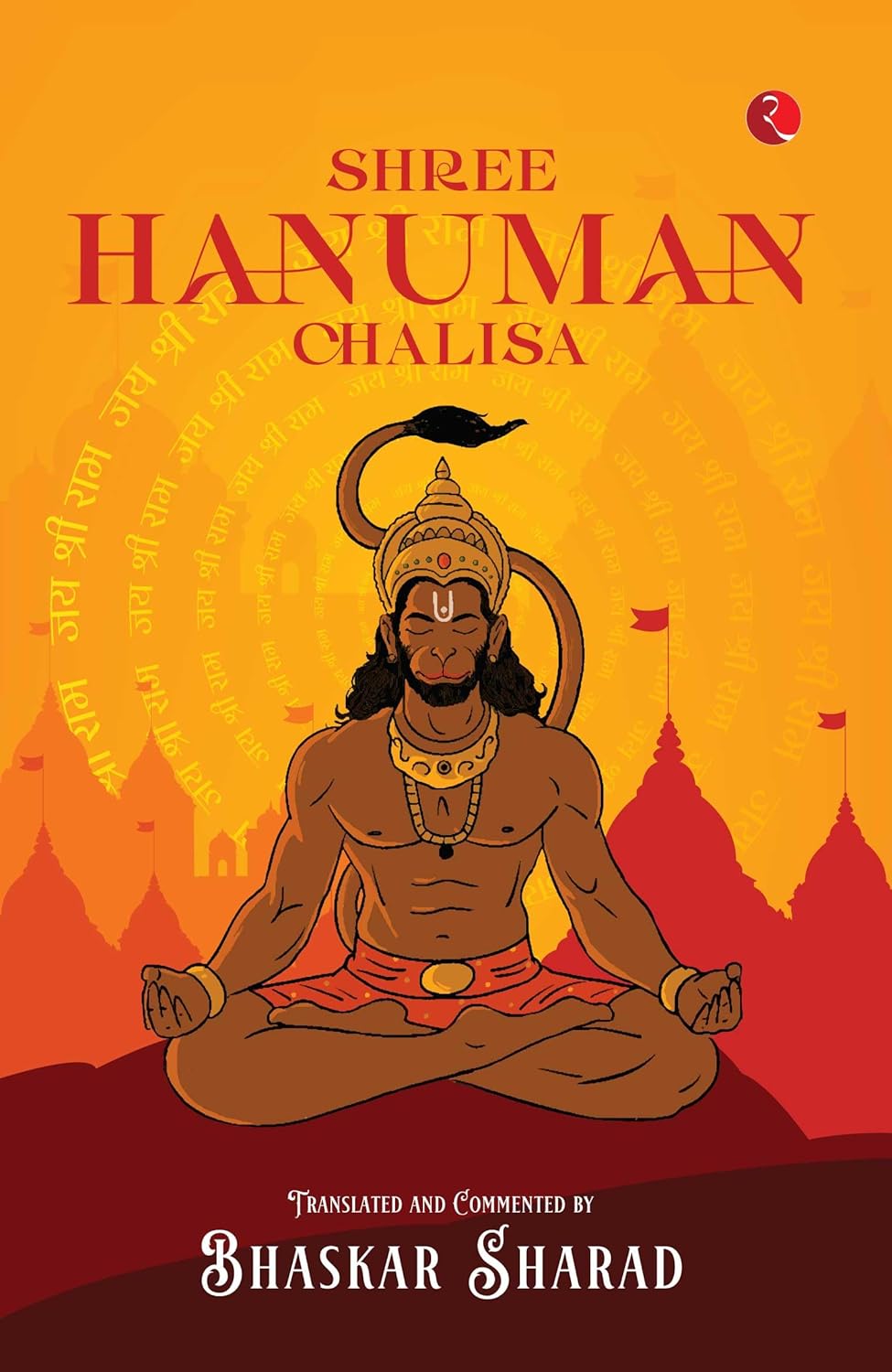
Shree Hanuman Chalisa by Bhaskar Sharad (Book Review: 4.25*/5) !!!

2162nd BLOG POST

4th Book of 2026


There are certain texts in Sanatan Dharma that we grow up hearing long before we fully understand them. Hanuman Chalisa is one such sacred composition. We memorize it as children, chant it in moments of fear, recite it before exams, interviews, journeys, and sometimes even before sleep. Yet, very few of us truly pause to understand the depth hidden within those forty verses.


Shree Hanuman Chalisa, translated and commented upon by Bhaskar Sharad and published by Rupa Publications, is a 92-page devotional companion that attempts to bridge this very gap. It brings together the original verses, the concluding dohas, and a clear, contemporary English translation, followed by a lucid explanation of each chaupai. What makes this book stand apart is not merely the translation, but the intention behind it — to make the sacred accessible without making it superficial.


Whenever life feels slightly unstable or emotionally heavy, I find myself turning toward spiritual literature. There is something deeply grounding about revisiting timeless verses that have carried generations through uncertainty. Reading this book felt less like “completing” a book and more like sitting down with a guide who gently explains what we have been chanting for years.


The author does not attempt to over-intellectualize the Chalisa. Instead, he unpacks its spiritual depth in simple language, allowing the reader to see Hanumanji not only as the embodiment of physical strength but as the ultimate symbol of devotion, humility, and fearless service. Often, in popular culture, Hanuman is celebrated for his power — lifting mountains, crossing oceans, defeating demons. But this commentary repeatedly reminds us that his real strength lies in surrender, discipline, loyalty, and unwavering faith.


One of the aspects I appreciated most is how the commentary connects ancient wisdom to everyday life. The explanations do not remain confined to mythology; they move into reflection. For example, verses that speak of fearlessness are gently linked to how we handle adversity in our personal and professional lives. Lines that praise Hanuman’s humility are interpreted in the context of ego and self-image in modern society. Without sounding preachy, the book quietly invites the reader to introspect.


The English translation is contemporary and clear, making it accessible even for those who may not be deeply familiar with Sanskritized Hindi. At the same time, the sacredness of the verses is preserved. This balance is not easy to achieve. Many translations either become too literal and rigid, or too simplified and diluted. Here, the devotional energy remains intact.


Another beautiful aspect of this book is that it encourages the reader to slow down. The Hanuman Chalisa is often recited quickly — sometimes mechanically. But when you read each chaupai followed by its explanation, you naturally pause. You reflect. You begin to see patterns — themes of surrender, courage, wisdom, discipline, service. It almost becomes a meditative exercise.


The commentary also subtly shifts the way we perceive devotion. Hanumanji is shown not as a distant deity to be feared or merely worshipped for favors, but as an ideal to be imbibed. His strength is not aggression; it is restraint. His courage is not arrogance; it is faith. His service is not compulsion; it is love. This shift in understanding can transform the way one approaches prayer itself.


In today’s fast-paced world, spirituality is often reduced to quick rituals or motivational quotes. This book resists that tendency. It does not try to market the Chalisa as a “success formula” or a miracle shortcut. Instead, it presents it as a lifelong companion — something to revisit during chaos, confusion, or even moments of gratitude.


If I have to mention a small limitation, it would be that readers looking for deeper historical or scriptural cross-references may not find extensive academic detailing here. The focus is devotional and reflective rather than scholarly. But perhaps that is also its strength. It does not overwhelm; it guides.


What I personally felt while reading this book was a renewed connection with verses I had taken for granted. It reminded me that repetition without understanding becomes habit, but repetition with awareness becomes transformation.


This book is not meant to be rushed. It is meant to be kept near your bedside, revisited on Tuesdays or Saturdays, carried during travel, or opened randomly on a difficult day. It works beautifully for young readers trying to understand the Chalisa in English, as well as for elders who wish to deepen their reflection.


Overall, Shree Hanuman Chalisa by Bhaskar Sharad serves exactly what it promises — a lucid, devotional commentary that bridges tradition and understanding. It preserves sacredness while enhancing clarity. It turns recitation into reflection.


For anyone who chants the Hanuman Chalisa regularly but has never truly explored its meaning, this book can become more than just a translation. It can become a spiritual mirror.


I would rate this book 4.25 stars out of 5 — not merely as a reading experience, but as a companion for inner steadiness and faith.

PURCHASE THE BOOK HERE

Thanks!


WRITING BUDDHA


25 February 2026 | By: Writing Buddha

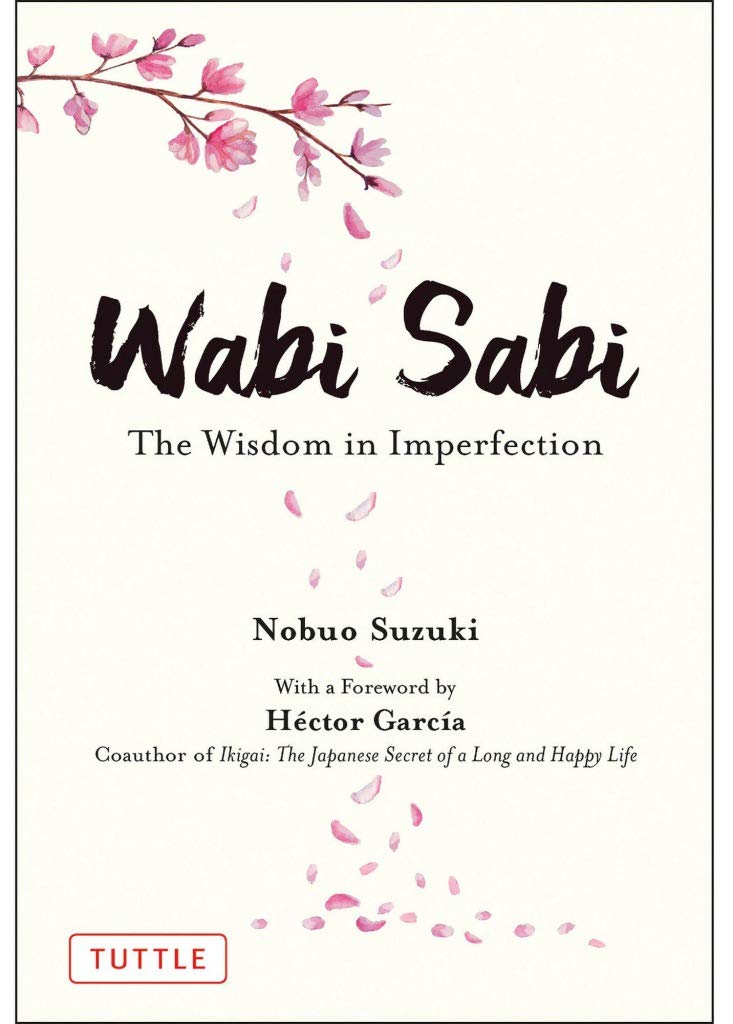
Wabi Sabi by Nobuo Suzuki (Book Review: 4.5*/5) !!!

2161st BLOG POST

3rd Book of 2026


Whenever life is not very pleasant, I try picking up a self-help book because there is always one or a couple of insights that make it easier to move forward through tough phases. Sometimes, even if the ideas are not new, a book presents them differently, bringing the same old advice into a more productive and implementable perspective. Reading “Wabi Sabi” by the Japanese author Nobuo Suzuki did exactly that for me. This 160-pages hardover book takes us deep into one of the Japanese Zen philosophies, which also forms the title of the book, meaning “The Wisdom in Imperfection.” The book carries a foreword by none other than Hector Garcia, the co-author of another famous Japanese bestseller, Ikigai.


The author explains the individual meanings of the words Wabi and Sabi, and what they represent when considered together. Taking us through different interpretations, Nobuo emphasizes that it is about finding wisdom and beauty in incompleteness, imperfection, the unfinished, and the impermanent. The book is divided into three sections—The Philosophy of Wabi Sabi, Wabi Sabi in Art, and Wabi Sabi as a Way of Life.


In the first section, the author introduces Zen philosophy and Wabi Sabi briefly before delving deeper. One chapter explains why we should not be too hard on ourselves while chasing perfection, as the world conditions us to believe that perfection is the ultimate goal. It highlights how, when we begin to accept our own imperfections, we also learn to accept the imperfections of others. In doing so, the world becomes slightly more bearable and empathetic.


The author further discusses relationships, explaining how expectations can often lead to disappointment. Everyone is living life according to their own timeline and vision; comparison and expectation only complicate relationships unnecessarily.


In the chapter on drawing inspiration from nature, the author explains how nature is endless and rarely perfectly finished. Even ancient palaces often have a corner left incomplete. The foam of the sea forms and dissolves endlessly. The idea of a “proper ending” is largely a human construct, and it is often the source of our inner turmoil.


The second section is dedicated to Japanese art and aesthetics, where creations are not always made with the intention of being perfectly finished. Instead, broken parts, recycled elements, and purposeful incompleteness are embraced to create something unique. Within this section, the chapter on melancholy stood out for me. The author beautifully explains why melancholy is an indispensable emotion and how it can exist without necessarily leading to depression or loneliness. Nobuo also highlights how people today often suppress melancholic feelings through medication. He gently guides us toward understanding how creativity, calmness, and even happiness can emerge by embracing Wabi Sabi principles.


In the third section, the author shifts towards practical implementation. He provides examples and tabular formats that contrast how things are commonly perceived versus how they could be approached through Wabi Sabi. The example of a broken bucket and the story of a painter who never saw his work as genius—even at the age of 110—illustrate how imperfection can lead to excellence. It reinforces the idea of focusing on personal growth rather than comparison.


The chapters on creating space through minimalism may sound like common advice, but the step-by-step guidance on decluttering both externally and internally makes it actionable. The author also references modern habits—constantly checking emails, scrolling social media, rushing towards our phones—instead of spending time in silence or with nature.


The book contains beautiful black-and-white and coloured glossy images, reinforcing how imperfection can be just as beautiful as something seemingly perfect. Each chapter ends with a poetic “Meditation” section. There are numerous lines that feel deeply reflective, even if they are not presented as typical motivational quotes.


Talking about drawbacks, I felt the author could have provided clearer guidance on how to maintain a Wabi Sabi mindset when professional and personal expectations constantly demand urgency and deadlines. Living this philosophy in a fast-paced environment is challenging. Additionally, including more real-life examples of public figures who embraced imperfection and turned it into success could have strengthened the practical aspect. For most of the book, the narrative leans more towards philosophy than implementation, placing it in the same segment it subtly critiques in other self-help books.


Overall, Wabi Sabi feels like a meditation in itself—best read when life feels chaotic and cluttered. It resonates deeply in such moments; otherwise, it may come across as just another philosophical self-help book rooted in spirituality. I give this book 4.5 stars out of 5. Thanks to my sister-in-law for gifting it to me.

PURCHASE THE BOOK HERE

Thanks!


WRITING BUDDHA

19 February 2026 | By: Writing Buddha

Pune Junction by Pranay Bhalerao (Book Review: 3.25*/5) !!!

2159th BLOG POST

2nd Book of 2026


There is always an excitement in reading one of your favourite authors trying a new genre. I remember feeling the same excitement when Chetan Bhagat, Ashwin Sanghi, and Amish Tripathi experimented with non-fiction, and I experienced a similar feeling when I saw Pranay’s update on social media about his attempt at a love story. I have finally finished reading his latest book, “Pune Junction,” which is around 270 pages long. It felt refreshing to read him writing a soft, emotional story after having read his dark and action-packed duologies and trilogies like The Lost World and The Kavaach series respectively.


Pranay’s writing style has been kept simple to cater to Gen-Z and young school- and college-going readers who do not enjoy complicated storytelling. This is a light read in terms of storyline and works perfectly as a travel companion or a relaxing weekend read. Pranay has structured the chapters interestingly—even though the timelines do not switch this time, the voice of narration does, as the story is told in the first person alternatively. The two main protagonists, Parth and Rucha, keep narrating their versions of the same storyline, with slight progression each time, which helps the reader move smoothly into the next scene.


The author has nicely created the setup of how a fresh college graduate enters the corporate world and finds everything new and different from his previous life. The way he describes the room of a bachelor employee, the habit of saving colleagues’ contacts names with company references, the new addiction to coffee, and how older employees prefer stepping outside the campus for tea or coffee despite free options at work—all these details feel relatable and authentic.


The characterization of both protagonists is well communicated. You get a clear glimpse of how anxious, nervous, and excited Parth is, while Rucha comes across as confident, ambitious, and a dreamer. Their initial interactions and subsequent dates are handled with restraint, without forcing unnecessary steamy scenes into the narrative. This shows Pranay’s confidence as a writer, as he avoids adding artificial elements merely to spice up the story. He works with a simple plot and builds the narration around it effectively. However, while reading the love story, you may be reminded of films like Saiyaara or Aashiqui 2, especially in the last one-third of the book where the setup feels quite similar. I personally wished the author had chosen a different direction, as it reduces the sense of freshness and makes it feel like another familiar love story.


While reading, I initially wondered why Pune as a city was repeatedly being brought into the conversations between the characters, but then it struck me that the title itself is based on the city. The author’s love for Pune is evident in the way he begins the journey from Shaniwar Wada and takes readers through different locations. However, I felt he could have explored the city more deeply by mentioning local cuisines and popular couple hotspots. That would have made the city feel more organically integrated into the love story rather than slightly forced in certain sections.


Talking about the drawbacks, I feel the simple storyline could have been comfortably wrapped up within 230–250 pages and did not necessarily require the current length. The author also needs to invest more in proofreading, as I noticed several typos and grammatical errors this time—something quite different from his earlier books, which were more polished. It felt as if the book went to print in a hurry. As mentioned earlier, the final section resembles several Bollywood films and books with similar storylines, making the ending somewhat predictable. I would rate this book 3.25 stars out of 5. Definitely not Pranay’s best work, but I am sure he will bounce back strongly with his next one. Do read it if you enjoy sweet and simple love stories.

 PURCHASE THE BOOK HERE

Thanks!


WRITING BUDDHA

20 January 2026 | By: Writing Buddha

Salman Khan: The Sultan of Bollywood by Mohar Basu (Book Review: 4.75*/5) !!!

2158th BLOG POST

1st Book of 2026

I remember going to the market with my mother every time we found a Salman Khan song from a new movie playing somewhere. We had an entire collection of cassettes featuring almost every movie Salman was part of during the 1990s and early 2000s. We still frown upon the day we had to give away that entire collection because CDs replaced cassettes and we could no longer find a cassette player in the market. With time, favourite actors changed, but the soft corner for my very first favourite actor still sits right at the front. Surprisingly, last year we even got to experience watching Salman Khan live on The Great Kapil Show sets, which felt like a dream coming true—one that we hadn’t even imagined dreaming about.


I had a wonderful start to my 2026 reading journey by picking up one of the finest biographies written on Salman Khan by Mohar Basu—the same author who won the Crossword Popular Choice Award last year for her debut biography on Shah Rukh Khan. To begin with, the entire package of the book—the hardbound cover, the embossed golden title, the printing quality, and Salman’s photograph on the cover—makes it extremely tempting to pick up the moment you enter a bookstore. I have kept it displayed on my study table for over a month now, simply because of the aura it carries.


Mohar Basu has structured this biography very intelligently to ensure it doesn’t read like a conventional life story. She does not follow a linear narrative starting from birth and moving chronologically forward. Instead, she picks defining moments and personality traits of Salman Khan and explores them in depth. With every chapter, she attempts to decode why Salman Khan is unlike any other Bollywood star and what truly makes him unique.


What stands out is that the author never appears biased in her narration, which makes her writing credible and compelling. She does not attempt to whitewash Salman’s personality; rather, she tries to understand—along with the reader—why he continues to be forgiven repeatedly and given chances unlike most public figures. She maintains a balanced approach while covering both his filmography and personal life.


Her chapter design reflects her deep understanding of reader engagement, especially in a book that runs over 300 pages. The narrative keeps you hooked without ever making you feel saturated. In fact, when I reached the last 50 pages, I slowed down intentionally just to spend more time with the writing. In IT, we talk about UX (User Experience), and in marketing, CX (Customer Experience). I genuinely believe Mohar Basu has introduced a new concept—RX, or Reader Experience—which she consistently prioritises throughout this book.


She takes us deep into the making and impact of Salman’s most important films such as Maine Pyar Kiya, Hum Aapke Hain Kaun, Hum Dil De Chuke Sanam, Wanted, Dabangg, Ek Tha Tiger, and Bajrangi Bhaijaan. The behind-the-scenes insights add freshness even to films we believe we already know everything about. Adjusting box-office collections for inflation further helps readers understand the true scale of Salman’s success and rising stardom.


The author frequently references her interactions with Salman Khan’s fans across the globe, sharing their personal stories of his impact on their lives. She also transparently acknowledges books, articles, and interviews she has referred to. I was glad to have already read the three books she frequently cites—Khantastic, The Three Khans, and Being Salman—which perhaps also proves how big a Bollywood lover I am—haha!


One generally assumes that any book on Salman Khan will heavily focus on his relationship with Aishwarya Rai. While that has been true in many accounts, Mohar Basu smartly limits this discussion, presenting essential facts without overindulgence. She articulately covers how Salman’s image suffered due to controversies and court cases without sensationalising them.


She dedicates chapters to his bodybuilding journey, which changed Bollywood’s perception of male physiques, and to his philanthropic work—highlighting how Being Human was simply a structured extension of values he practised since childhood.


What makes the book even more engaging is that the author occasionally lets her emotions as a Salman fan surface, making the narrative conversational and intimate—like discussing a shared admiration with a close friend. This book will remain a definitive reference for understanding why Salman Khan continues to inspire forgiveness, loyalty, and fascination. As they say, you may love him or hate him, but you cannot ignore him—and Mohar Basu’s research proves there is no better example of that statement than Salman Khan.


Overall, this book took me through nostalgia, excitement, emotion, curiosity, concern, inspiration, and amazement—sometimes all within a few pages. This explains why Mohar Basu’s books continue to sell despite their premium pricing. I give this book no less than 4.75 stars out of 5. It is a true page-turner. Right after finishing this review, I am picking up her biography on Shah Rukh Khan, and I sincerely hope she writes on other Bollywood personalities like Amitabh Bachchan, Priyanka Chopra, and Hrithik Roshan as well.

PURCHASE THE BOOK HERE

Thanks!

WRITING BUDDHA

29 December 2025 | By: Writing Buddha

Karma by Sadhguru (Book Review: 4.75*/5) !!!

2157th BLOG POST 

24th Book of 2025

Whenever I feel that my life is not on the right trajectory, the one thing my mind, body, and every element within me naturally gravitates towards is spirituality. And the one go-to person I trust the most on this subject is Jaggi Vasudev—Sadhguru. His previous books have had a deep impact on me, such as Inner Engineering, Body, Mind & Spirit, Adiyogi, Death, and others. Finally, I picked up one of his most popular books, “Karma”, which carries the tagline A Yogi’s Guide to Crafting Your Destiny. This 336-page book was published in 2021, and I honestly don’t know how it took me four years to finally read and complete it.


This also marks my final book for the 2025 reading challenge of 24 books. I couldn’t have asked for a better way to complete this target than with such a soulful and spiritual read—one that added a new dimension and perspective to my thought process. We often use the word karma very casually, without reflecting on the deeper meaning and philosophy it carries. Sadhguru makes a sincere effort to explain how complex and layered the science of karma truly is, while simultaneously presenting it in a way that feels accessible and easy to grasp.


The narration and division of chapters are well executed, making it easier for readers to navigate the book without feeling overwhelmed. I read it in multiple sittings, and not once did I feel disconnected or lost despite the breaks. Kudos to both the author and the editor for maintaining such clarity and flow throughout the book.


Each chapter begins with a quote that is deep and impactful in its own way. These quotes gently push the reader to dive deeper into the chapter that follows. The way the book is structured reminded me of college textbooks—where we are first given the background, followed by definitions, and then gradually introduced to the complexity of the subject with each progressing chapter.


Sadhguru discusses karma from the perspectives of genetics and memory, which was particularly intriguing. It is surprising to learn how people from the same genetic lineage can experience certain benefits when even a few individuals within that lineage engage in karmic purification practices. Often, when Sadhguru begins a chapter, you may wonder how it connects to the book’s central theme—but as you keep reading, the connection unfolds naturally and convincingly.


He also provides context on how physical relationships contribute to bodily karma, explaining why ascetics traditionally avoid them in order to minimize karmic attachments. Similarly, he briefly explains why it is advised not to engage in multiple physical relationships. One entire chapter focuses on why the spiritual path must be walked alone—because only then can an individual fully work on releasing their own karma.


The Shankaran Pillai episodes are, as always, humorous and refreshing. In several chapters, there are sections titled Sadhana, which describe simple spiritual practices that can help release karma in everyday life. These sections add great value by emphasizing practical application rather than limiting the book to theoretical understanding alone.


Overall, this is one of the finest books by Sadhguru, offering profound insights into karma and various spiritual dimensions. I would rate this book 4.75 stars out of 5. It is definitely recommended.

 PURCHASE THE BOOK HERE

Thanks!


WRITING BUDDHA

16 December 2025 | By: Writing Buddha

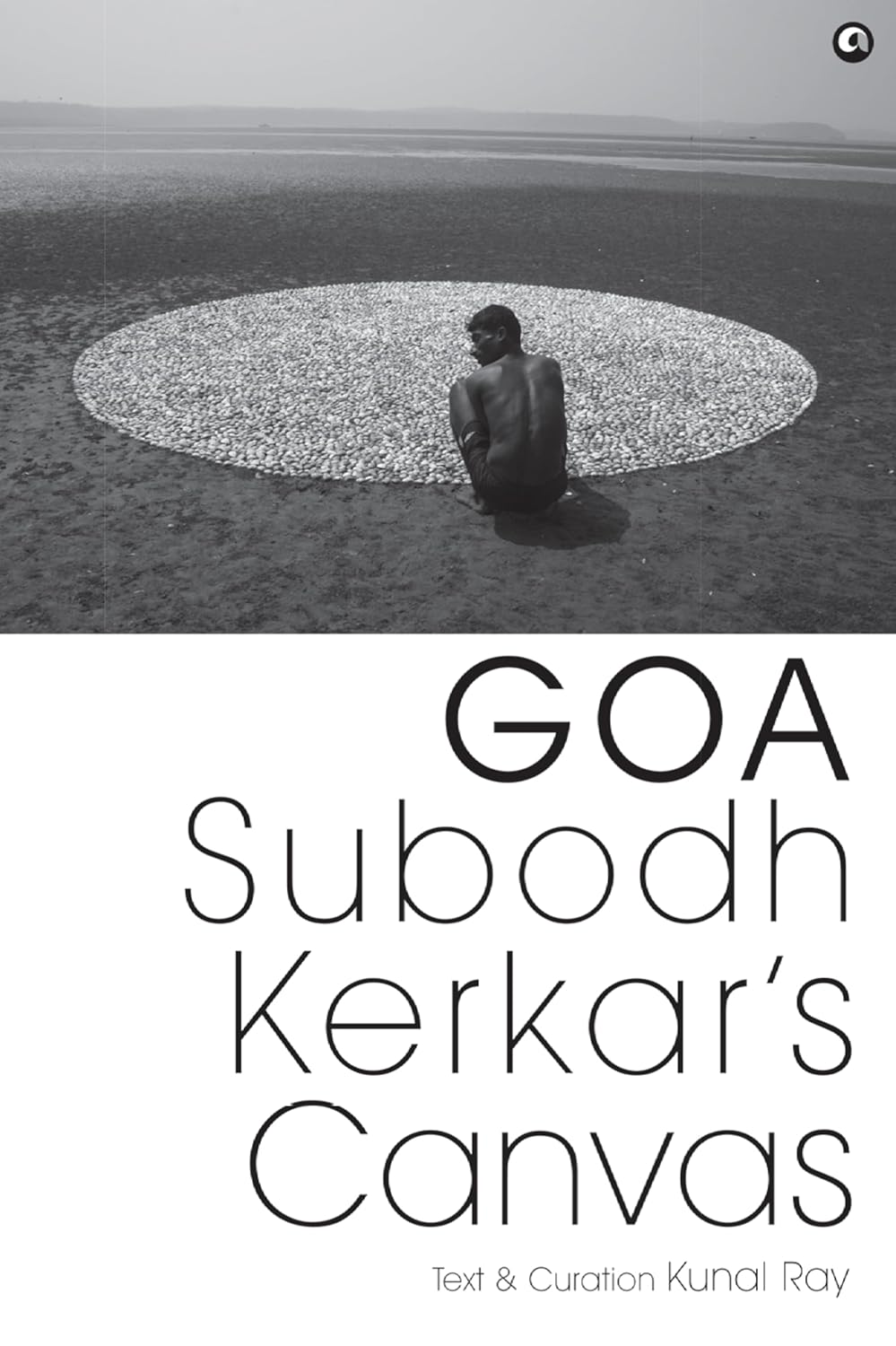
Goa : Subodh Kerkar’s Canvas by Subodh/Kunal Ray (Book Review: 4.5*/5) !!!

2156th BLOG POST

23rd Book of 2025

Some books are not meant to be read in a hurry; they ask to be absorbed the way one absorbs a place—slowly, through layers of memory, emotion, and silence. Goa: Subodh Kerkar’s Canvas is one such book. It does not merely document art; it meditates on a land, its waters, and the long shadows of its history. When I had received this book, I had thought that I would finish it within 15 minutes because of 35-pages text and rest of it displaying the artwork of the author but when I started reading it, these 35 pages took an hour for me to read. It sounded so poetic and serene that I really felt that the whole Goa and its history, silence, peace and ocean are running in front of my eyes.


Subodh Kerkar’s Goa is not the postcard paradise we are conditioned to admire. It is alive, bruised, playful, and deeply introspective. Through paintings, installations, and experimental works, Kerkar turns Goa into a living archive—one where beauty and discomfort coexist without apology. The book gently reminds us that art need not always soothe; sometimes, its role is to disturb just enough to awaken thought.


What makes this collection compelling is the artist’s refusal to separate aesthetics from responsibility. Alongside lyrical representations of houses, boats, and coastal life, there exists an unflinching engagement with darker chapters of Goan history—colonial violence, the Inquisition, and the exploitation that arrived with foreign rule. Yet, Kerkar never allows the narrative to become heavy-handed. There is wit, irony, and even playfulness—most memorably in works that reimagine historical figures through absurd, almost childlike symbolism.


Kerkar’s gaze is observant and democratic. Fisherfolk, food, shells, laterite, sand, and sea are all granted equal dignity. His choice of material—terracotta, crochet, ink, light, even living oysters—blurs the line between art and environment. The ocean is not a backdrop here; it is a collaborator. Nature breathes through these works, reminding us that culture and ecology are inseparable.


Reading this book feels like walking barefoot along a beach scattered with memories—some warm, some sharp. It urges the reader to look again at Goa, beyond tourism and nostalgia, and to recognize it as a space of resilience and resistance. In doing so, Goa: Subodh Kerkar’s Canvas becomes more than an art book; it becomes a quiet philosophical statement on place, identity, and the enduring power of creative dissent.


It has been for the very first time that I have read a book based on painting where the author’s intent and approach is mentioned first and then the book is full of his artwork that speaks for itself. The book made me feel like visiting author’s museum in Goa as well. If you have ever travelled to Goa or it’s your favorite destination like me, please get this book as your coffee table favorite. I give this 4.5* out of 5.

 PURCHASE THE BOOK HERE

Thanks!


WRITING BUDDHA


The Rabbit in the Moon by Meena Arora Nayak (Book Review: 3.25*/5) !!!

2155th BLOG POST

22nd Book of 2025

Some books do not rush to impress; they sit quietly beside you, like a wise elder, waiting for the reader to slow down. The Rabbit in the Moon by Meena Arora Nayak is one such book. Rooted in the timeless wisdom of the Panchatantra, it brings back stories many of us may have heard in fragments during childhood, yet presents them with a freshness that feels both comforting and relevant.


The book retells two powerful tales: The Tale of How the Bedbug’s Selfishness Cost the Louse Her Life and The Tale of How the Rabbit in the Moon Saved His Relatives. Though simple on the surface, both stories gently unfold deeper truths about life, choices, and consequences. The author’s language is lucid and unpretentious, allowing the moral to emerge naturally rather than being forcefully stated. This makes the reading experience meditative rather than instructional.


What stands out is how effortlessly these ancient stories mirror modern realities. The tale of the bedbug and the louse is a quiet reminder of how reckless behavior, impatience, and selfish ambition can destroy not only the wrongdoer but also the innocent. It speaks subtly about the dangers of bad company and poor judgment—lessons that remain painfully relevant in today’s fast-paced, outcome-obsessed world.


On the other hand, the story of the rabbit offers a soothing counterbalance. It celebrates intelligence, calm thinking, and moral courage over brute strength. The rabbit’s wisdom becomes a metaphor for leadership rooted in compassion and clarity, reminding readers that true power lies in presence of mind rather than physical dominance.


Meena Arora Nayak deserves appreciation for preserving the soul of the Panchatantra while making it accessible to young readers and equally meaningful for adults. The Rabbit in the Moon is not merely a children’s book; it is a gentle pause, a reflective read that invites us to look inward.


In a world that constantly urges us to run faster, this book softly asks us to think wiser—and that, perhaps, is its greatest strength. The biggest drawback of the book is its cost- Rs. 250 which I believe is quite much considering it has just two short stories for little Kids. Publishers must think something about this. Overall, I give this book 3.25* out of 5.

 PURCHASE THE BOOK HERE

Thanks!


WRITING BUDDHA

15 December 2025 | By: Writing Buddha

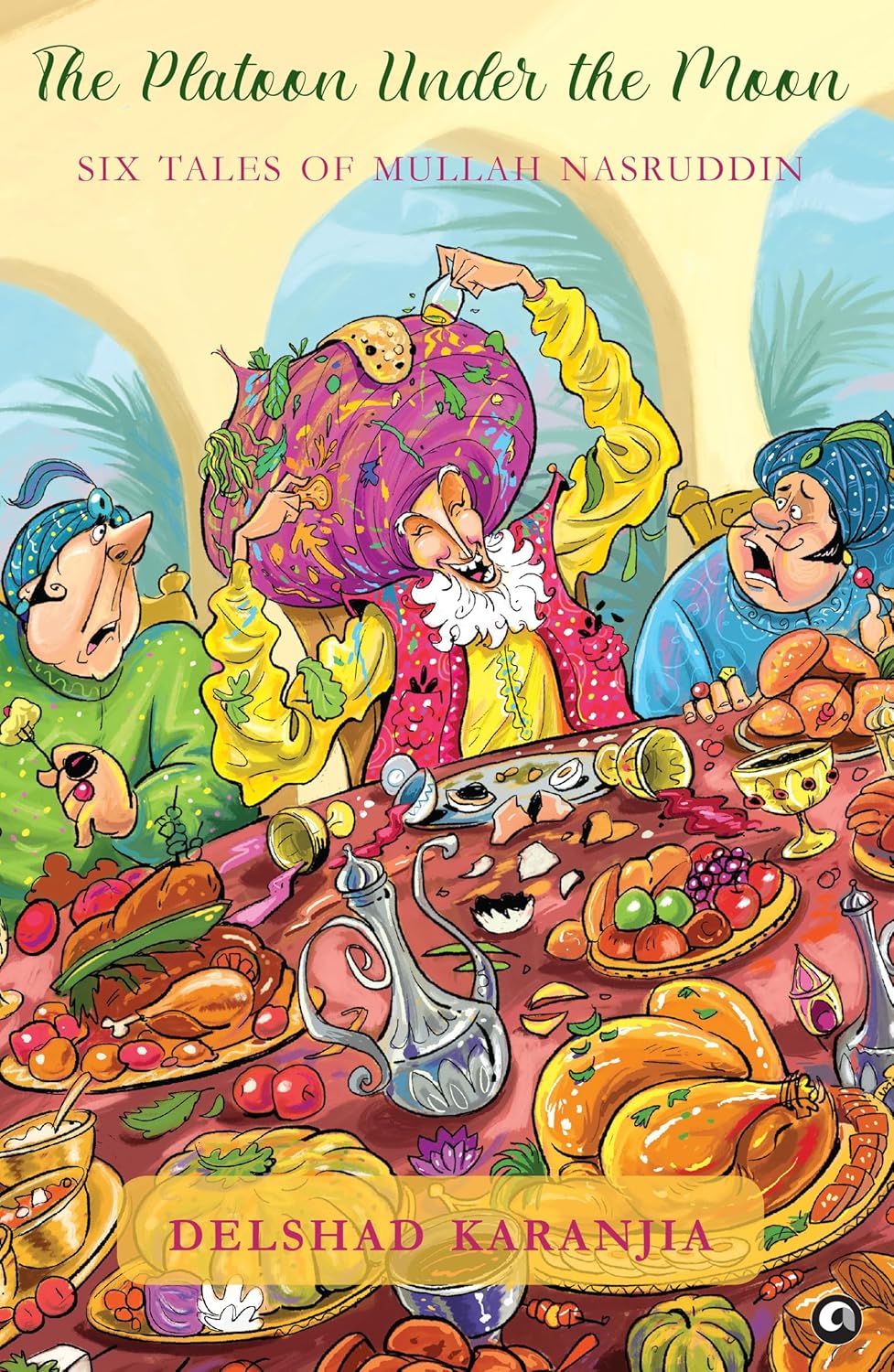
The Platoon Under the Moon by Delshad Karanjia (Book Review: 4.25*/5) !!!

2154th BLOG POST

21st Book of 2025

Another book by Delshad Karanjia was finished within half an hour, with a smile on my face. Another set of six tales based on the character of Mullah Nasruddin felt like reading funny WhatsApp messages shared by a friend. There are many books written for children with the intention of teaching values or lessons, but Delshad’s attempt here highlights why it is equally important to tell stories to children purely for fun, without attaching any strong educational agenda to them.


Of course, the narration, story structure, and language still help students learn the art of storytelling, writing, and visualization. However, the author’s primary intention—to simply make children laugh through these stories—is what makes this book special. In this collection, Mullah Nasruddin’s six tales are crafted in a way that showcases how cleverly he outwits both the good and the bad people in society.


Through two of the stories, we see how he troubles his teacher and a shopkeeper, while another story humorously conveys how he makes the host of a party realize that people should be valued more than their rich attire. The story that shares the book’s title is another amusing take, highlighting how Mullah sometimes chooses not to use his brain at all.


The illustrations are well done and can also encourage children to draw and add their own colours. These are stories that children will not only enjoy reading but will also eagerly share with their friends, spreading laughter all around. I give this book 4.25 stars out of 5.

 PURCHASE THE BOOK HERE

Thanks!


WRITING BUDDHA

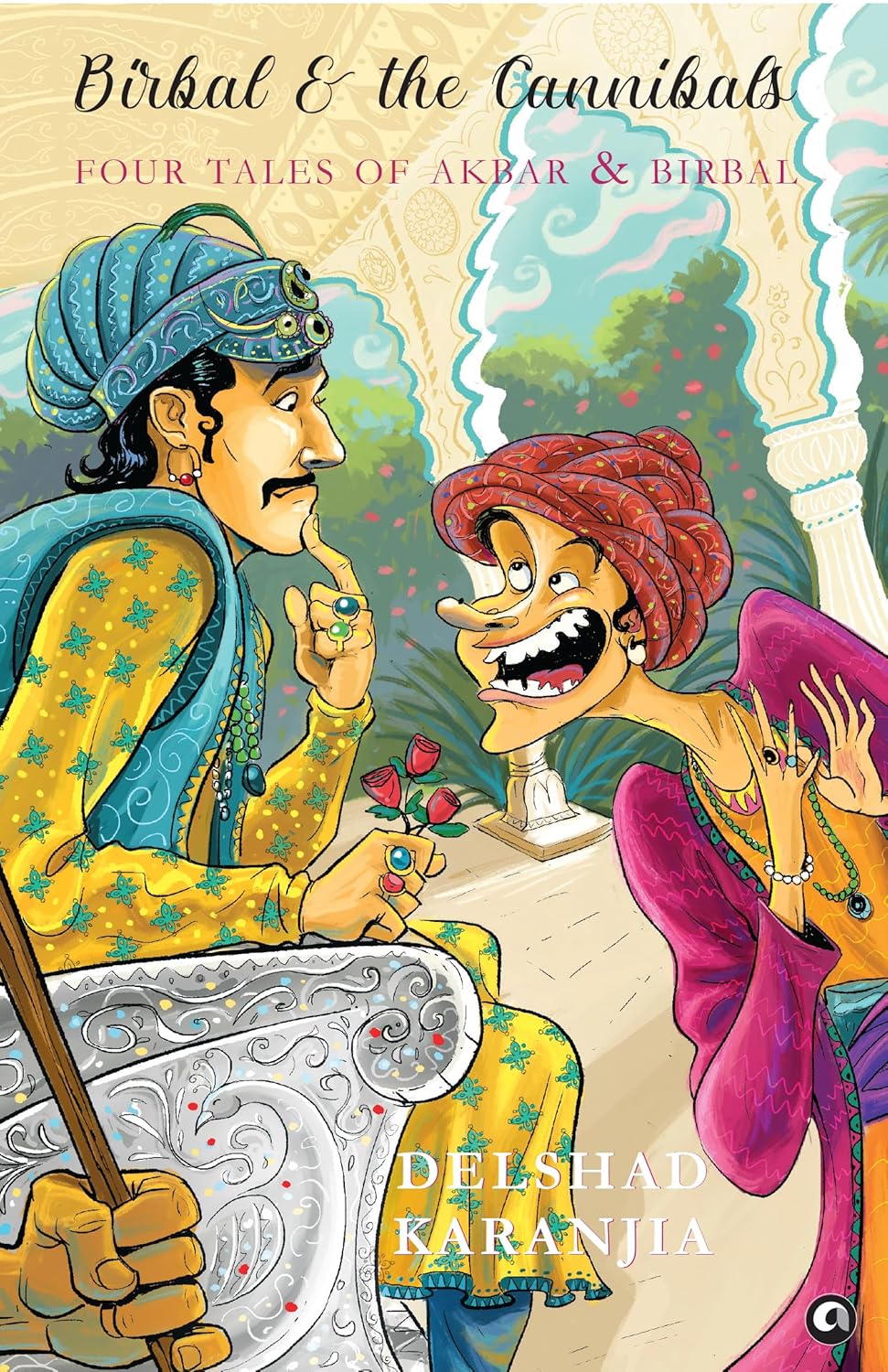
Birbal and the Cannibals by Delshad Karanjia (Book Review: 4.5*/5) !!!

 2153rd BLOG POST


20th Book of 2025

2025 has been a year of nostalgia and revisiting my childhood. I find myself picking up children’s books and, before gifting them to their future owners, ending up reading them myself. This time, I read “Birbal & the Cannibals,” which consists of four tales of Akbar and Birbal, beautifully rewritten and narrated by Delshad Karanjia. I am truly in awe of both the author and Aleph Publications for bringing these timeless stories back for the new generation.


All four stories in this book primarily highlight Birbal’s intellect and wit in an optimistic manner, making it an engaging read as one sees how he proves himself time and again. In one story, Akbar becomes furious after getting injured during a hunting expedition. However, the very same incident later saves him, and Birbal’s clever explanation of how these events ultimately helped both of them makes Akbar bow to him once again in respect.


In another story, the jealousy of the court members towards Akbar’s favoritism of Birbal is portrayed well. This leads to a situation where they are challenged to identify the real mother tongue of a man who can fluently speak multiple languages. When no one is able to determine his native language, Birbal comes up with a completely unique method to reveal the truth, once again proving in front of everyone why he is unmatched.


Similarly, one of the stories depicts how Birbal breaks a friendship to ensure that both the parents of the children involved are happy, so that the children can focus on their careers. This episode clearly reflects his sharp-mindedness and practical wisdom. The final story revolves around a painting competition between Birbal and Akbar’s brother-in-law, based on the theme of peace. Birbal’s artwork appears to be completely opposite to the theme at first glance, but the way he explains his perspective highlights the philosophical depth of his thinking. This story also helps children understand the deeper meaning behind art and creativity.


Overall, this book stands out as one of the best children’s books published by Aleph in recent times. I give it 4.5 stars out of 5.

PURCHASE THE BOOK HERE

Thanks!


WRITING BUDDHA


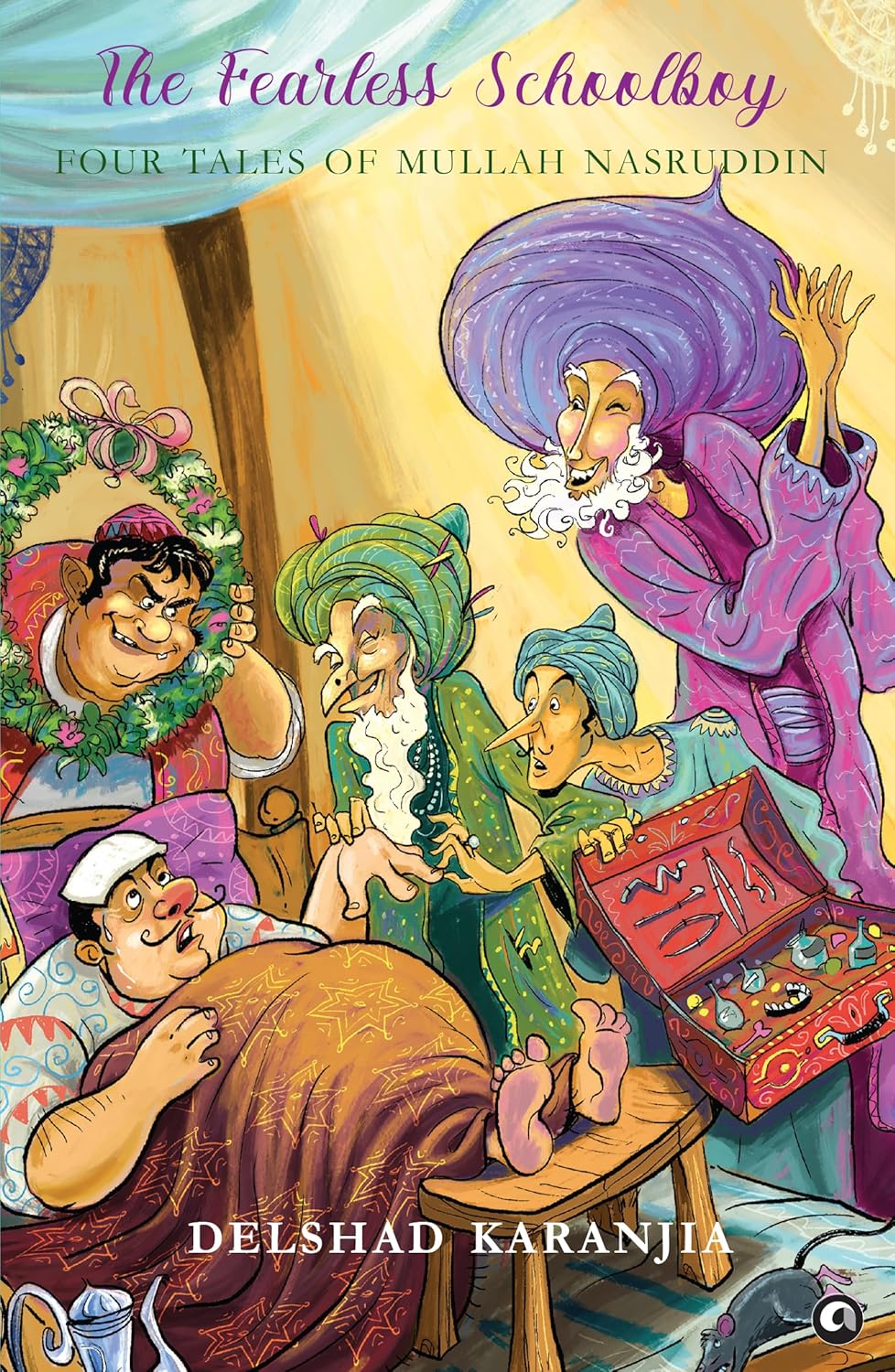
The Fearless Schoolboy by Delshad Karanjia (Book Review: 4.5*/5) !!!

2152nd BLOG POST 

19th Book of 2025

I have just completed reading Aleph Publication’s children’s book titled “The Fearless Schoolboy”, written by Delshad Karanjia. This is a short anthology consisting of four tales featuring Mullah Nasruddin. The book includes four different stories with Mullah Nasruddin as the main protagonist, portrayed through a humorous caricature where he acts smart in some stories and completely plays dumb in others. However, all the stories are designed to provide entertainment along with a meaningful message, helping children understand important life lessons through simple examples and storytelling.


The four stories included in this book are Cha and Chat, No Shortage of Advice, Preacher’s Block, and Planning Ahead. The first story did take me some time to adjust to the author’s writing style, but the remaining three stories completely engaged me as a reader. The second story, No Shortage of Advice, lives up to its title perfectly. It cleverly highlights how people never stop giving advice or pointing fingers, no matter what you do. The humorous tone of the story keeps the reader hooked throughout.


The third story, Preacher’s Block, is another amusing take on how the protagonist behaves lazily while performing his duties, assuming that no one is monitoring his actions. This continues until he is finally reprimanded. The moment an ultimatum is given, the sudden shift in his behaviour, driven by fear, leads to a funny and satisfying conclusion.


The fourth and final story, Planning Ahead, is once again a humorous tale where the protagonist follows his master’s instructions like a robot, without understanding the context. This blind obedience ultimately results in a laugh-out-loud ending.


Overall, this book is a great choice for children to enjoy light-hearted reading while also developing a sense of humour along the way. I give this book 4.5 stars out of 5.

 PURCHASE THE BOOK HERE

Thanks!


WRITING BUDDHA


14 December 2025 | By: Writing Buddha

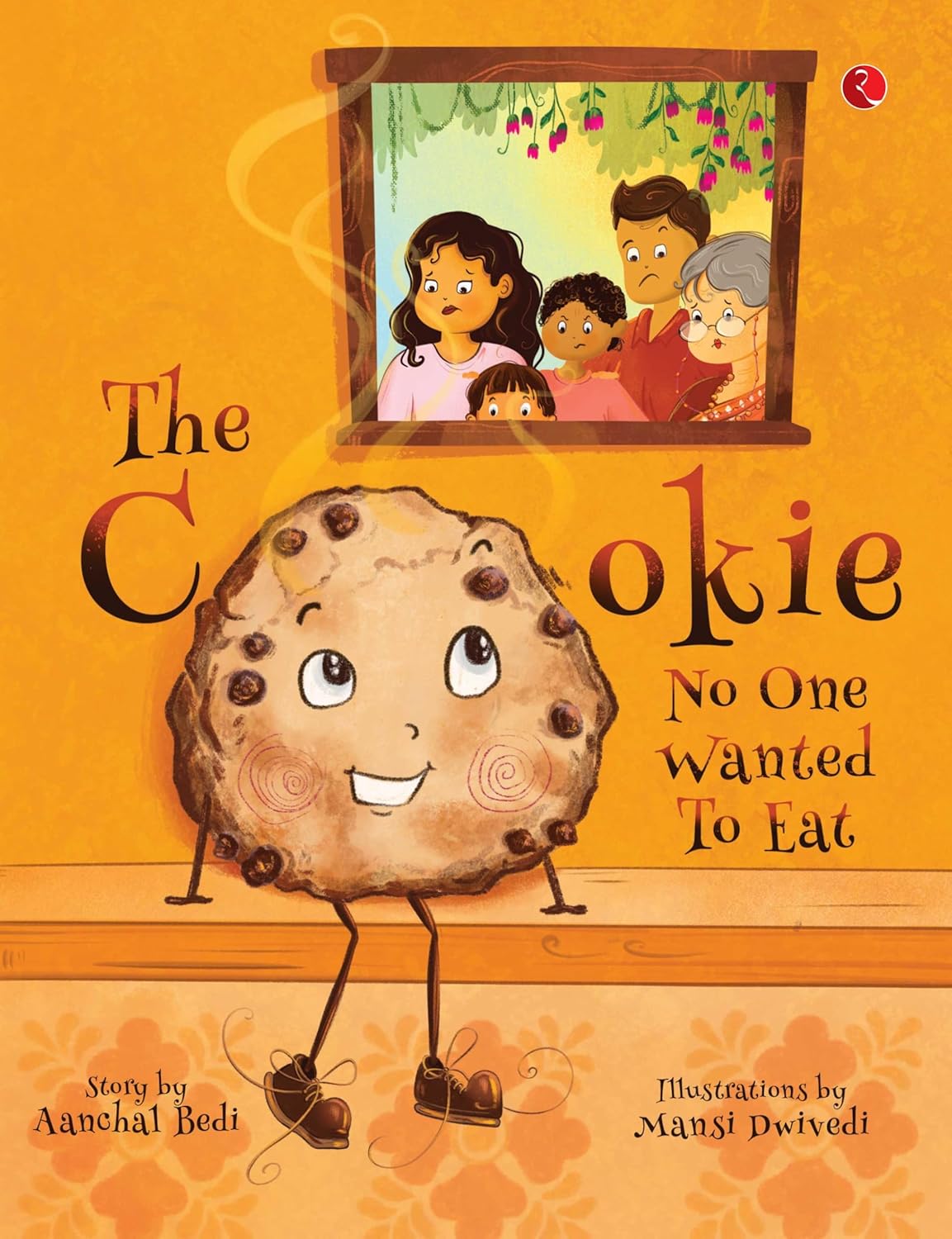
The Cookie No One Wanted To Eat by Aanchal Bedi (Book Review: 4.5*/5) !!!

2151st BLOG POST 

18th Book of 2025

Children’s books often appear simple on the surface, but the best ones manage to carry messages that stay with readers long after the final page—sometimes even more so for adults than for children. The Cookie No One Wanted to Eat is one such book. It may be written for young readers, but its underlying message about self-worth, acceptance, and empathy feels relevant across age groups. The book is written by the authoress- Aanchal Bedi and beautifully illustrated by Mansi Dwivedi.


The story revolves around a freshly baked cookie that only wants to be loved and enjoyed. However, everyone who encounters it finds a reason not to accept it—too hot, too crunchy, too strong in flavour, or simply not to their liking. Through this repeated rejection, the cookie slowly begins to question its own worth. What works well here is how naturally the author mirrors a very human experience through a non-human character. The cookie’s confusion and disappointment feel familiar, even though the setting is playful and light-hearted.


The book uses rhyme effectively, making the narrative engaging and easy to read aloud. This rhythmic flow helps maintain a gentle pace, allowing children to stay attentive while absorbing the emotions embedded in the story. Without becoming heavy or preachy, the book subtly introduces the idea that not being accepted by everyone does not mean one lacks value. This is an important lesson, especially for children growing up in an environment where comparison and validation often begin early.


What I particularly liked is how the story does not rush towards its conclusion. The cookie’s emotional journey is given enough space to unfold, making the eventual realization feel earned rather than forced. When acceptance finally comes, it arrives not from those who initially rejected the cookie, but from those who truly needed it. This shift quietly reinforces the idea that belonging is not universal—it is personal.


The illustrations complement the narrative well, adding emotional depth without overpowering the text. The expressions, colours, and details help young readers connect with the cookie’s feelings, making the experience more immersive. Additionally, the activities, prompts and exercises at the end of the book are a thoughtful inclusion. They extend the story beyond reading, encouraging reflection, discussion, and emotional awareness—something parents and educators will appreciate.


Overall, The Cookie No One Wanted to Eat succeeds because it respects its young audience. It does not simplify emotions or offer unrealistic optimism. Instead, it acknowledges hurt, confusion, and rejection, while gently guiding readers towards self-acceptance and kindness. It is a book that can open meaningful conversations—about confidence, empathy, and the importance of being gentle with oneself.


This is a warm, thoughtful read that works equally well as a bedtime story or a classroom discussion starter. Sometimes, the simplest stories leave the deepest impressions, and this book is a good reminder of that. Overall, I give the book 4.5* out of 5. Get it for your younger ones!

PURCHASE THE BOOK HERE

Thanks

WRITING BUDDHA


The Legendary Diamantaire: The Life of Kirtilal K. Doshi by Bakhtiar K. Dadabhoy (Book Review: 4.25*/5) !!!

2150th BLOG POST

17th Book of 2025

Reading autobiographies and biographies has always been my biggest passion when it comes to reading, across all genres. Reading about individuals who have transformed entire scenarios with their vision, hard work, and attitude brings me a lot of confidence during tough situations in my own life as well. It becomes even more interesting and intriguing to read about personalities who have made an impact comparable to other inspirational figures but aren’t well-known due to limited media or PR coverage. One such biography that I read this week is “The Legendary Diamantaire”, written by Bakhtiar K. Dadabhoy, based on the life of Kirtilal K. Doshi.


The author very intelligently begins the book without directly diving into the birth details of the central figure. Instead, he starts by explaining how the diamond industry has functioned over centuries across the world and particularly in India. I liked how he described India’s prowess in this business and, more specifically, the unique contribution of the Palanpuri Jains. The way their skill set made even Austrians and other Europeans look towards Indians for their mastery in diamonds makes for a compelling opening to the book.


The author then moves into the life of Kirtilal’s father, Kalidas, who actually laid the foundation for the family. The journey of how he and his brother Shantilal started together under their father’s guidance is fascinating, as Kalidas himself emerges as an inspiring personality. Even in the early years, the family values come to the forefront—especially in the respectful and dignified manner in which the business was eventually divided between the two brothers. This explains why many family-run businesses in India have stood the test of time.


Gradually, the author introduces us to the pioneering journey of Kirtilal Doshi, detailing how he went on to build one of India’s most respected jewellery brands—Kirtilals, known for diamonds, gold, and fine craftsmanship—and how he played a crucial role in professionalizing and modernizing the Indian jewellery trade.


It is astonishing to learn how Kirtilal Doshi understood the power of branding and positioning a business during an era when formal marketing expertise was almost nonexistent. This speaks volumes about his mindset and business acumen. His contribution to the diamond industry, not just as a businessman but as a visionary, is remarkable—especially his role in shaping regulations, constitutions, institutions, SOPs, and ethical standards within the industry.


Similarly, the book highlights how his organization became the first to introduce several initiatives in the diamond industry—be it manufacturing advancements, branding strategies, or the use of laser technology for diamond shaping. These examples reflect the competitiveness and foresightedness that defined his leadership. The book clearly demonstrates how a family business can break traditional limitations and evolve into a global brand.


The final chapters shift focus from Kirtilal Doshi the businessman to Kirtilal Doshi the individual. The author provides insight into how influential personalities conduct themselves in their personal lives, with family and friends. His views on ethics in business make for an especially impactful chapter. Equally inspiring is his attitude during his later years, when his business faced difficult phases—rather than succumbing to despair, he supported his son by writing several motivational letters. His perspectives on marriage and the letter he wrote to his grandchildren about leading a balanced life after marriage further reflect his belief in maintaining a simple, peaceful, and healthy family life.


I could go on, but overall, this book is essential reading for students in business schools, professionals in corporate life, and even those who are retired. It teaches how an individual can pursue multiple roles in life, stay ahead of changing times, and yet not remain confined by traditional thinking. I would rate this 151-page book 4.25 stars out of 5.

 PURCHASE THE BOOK HERE

Thanks!


WRITING BUDDHA


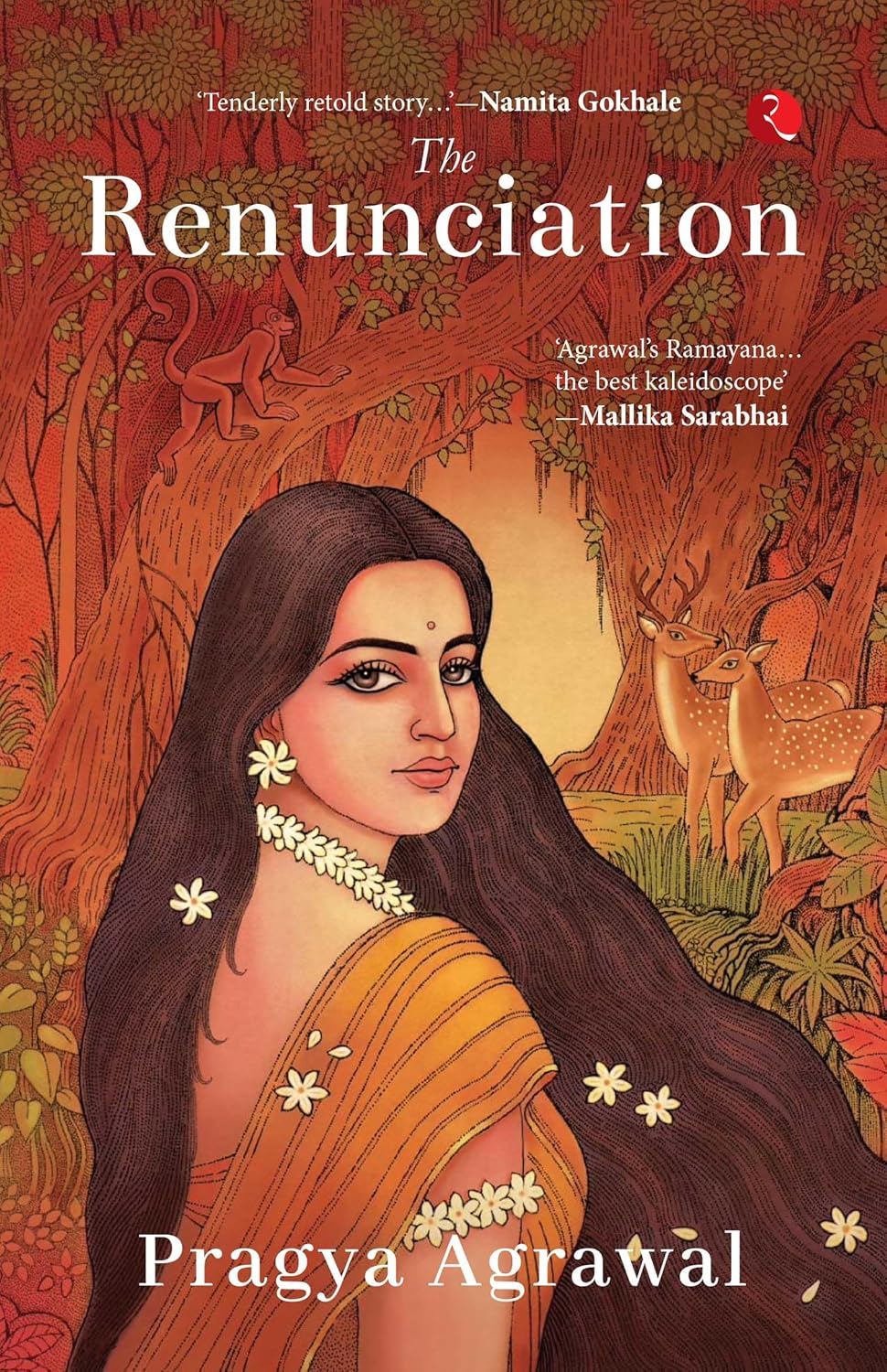
The Renunciation by Pragya Agrawal (Book Review: 3.75*/5) !!!

2149th BLOG POST

16th Book of 2025

Mythological retellings have become increasingly popular in recent years, but very few manage to strike a balance between reverence for the original text and a fresh, emotionally engaging perspective. The Renunciation by Pragya Agrawal succeeds in doing exactly that. Instead of retelling the Ramayana in its entirety, the book chooses to focus on one of its most painful yet profound chapters—Sita’s life after her exile, her motherhood, and her ultimate choice of dignity over belonging.


The story unfolds in the serene surroundings of Sage Valmiki’s hermitage, where Sita lives with her twin sons, Luv and Kush. Far removed from the grandeur of Ayodhya and the noise of royal expectations, this setting allows the reader to see Sita not as a divine symbol, but as a deeply human woman—one who loves fiercely, remembers painfully, and carries silence as both shield and strength. The author beautifully captures the emotional stillness of this phase of Sita’s life, making the forest almost a character in itself.


What stands out most in this retelling is the way Sita’s inner world is portrayed. Her suffering is not dramatized unnecessarily, nor is it reduced to victimhood. Instead, it is presented as lived experience—layered with love, disappointment, courage, and unwavering self-respect. The scenes between Sita and her sons are particularly touching. Her maternal instincts, her protectiveness, and her quiet fear of the truth one day surfacing are written with great sensitivity. These moments give the book its emotional core.


The narrative gains further depth when Valmiki teaches Luv and Kush to sing the Ramayana, unknowingly narrating the life story of their own parents. This irony is handled with subtlety, allowing readers to feel Sita’s internal conflict without overt exposition. The past, which she has carefully sealed away, slowly begins to resurface—forcing her to confront memories she never truly escaped.


What I appreciated most about The Renunciation is that it does not attempt to judge the epic or its characters. Lord Ram is not diminished, nor is Sita elevated through comparison. Instead, the book gently highlights the emotional gaps within the larger narrative—spaces where Sita’s voice was often unheard. Her final act of renunciation is portrayed not as defeat, but as a conscious, powerful choice—one rooted in self-worth and inner clarity. The few pages are very emotional and once the book ended, it wasn’t easy for me to keep it aside and forget. It took me lot of days to come in terms with it.


Talking about few drawbacks, I feel that the sections of the story have been over-described which makes it boring to read the complete sentences at times and you feel like skipping few lines because they don’t take the story further. Similarly, I feel that there is lot to Sita’s character which could have been explored but kept away from the scope of the book which makes the readers feel incompleteness to her complete journey.


Overall, The Renunciation is a thoughtful, emotionally resonant retelling that invites readers to pause and reflect. It is less about spectacle and more about silence, endurance, and the courage it takes to let go. For readers who enjoy mythology told through introspection rather than grandeur, this book is a rewarding and memorable read. I’ll give this book 3.75* out of 5.

 PURCHASE THE BOOK HERE

Thanks

WRITING BUDDHA


The Four Avengers Versus the Elephant: Two Tales from the Panchatantra by Meena Arora Nayak (Book Review: 4*/5) !!!

2148th BLOG POST 

15th Book of 2025

Reading children’s books can be quite interesting when you want to read something light while having tea or coffee at someone’s home—especially when they have kids for whom such books have been purchased. I took advantage of a similar opportunity and read a book titled “The Four Avengers Versus the Elephant” published by Aleph. The book consists of two tales from the Panchatantra, retold by Meena Arora Nayak.


The book is meant for children above the age of nine, as the author has ensured that even though her stories are targeted at kids, they are written in a way that imparts knowledge beyond the basics. I, as someone in my mid-30s, could also find wisdom in the way these stories are narrated. Nayak uses conversations between animals as a medium to deliver life lessons and Chanakya-like insights. Many dialogues are written in a manner that resembles explanations of ancient Sanskrit shlokas.


The first story focuses on the qualities and responsibilities of a king. Within the same tale, the author highlights how a vulnerable animal like a hare can outsmart a mighty lion who is ready to kill and eat him. The way the hare leads the lion to his own death is told very intelligently and gives hope to anyone who considers themselves weaker than others.


Similarly, the second story narrates how four small animals and insects unite to defeat an elephant who had been troubling one of their friends. This story beautifully signifies how the power of unity can bring even the most powerful to their knees.


Overall, I loved reading this book. I rate it 4 stars out of 5. I just feel that children’s books like this shouldn’t be priced as high as they often are — hopefully, publications can find a way to make them more affordable.

 PURCHASE THE BOOK HERE

Thanks!


WRITING BUDDHA

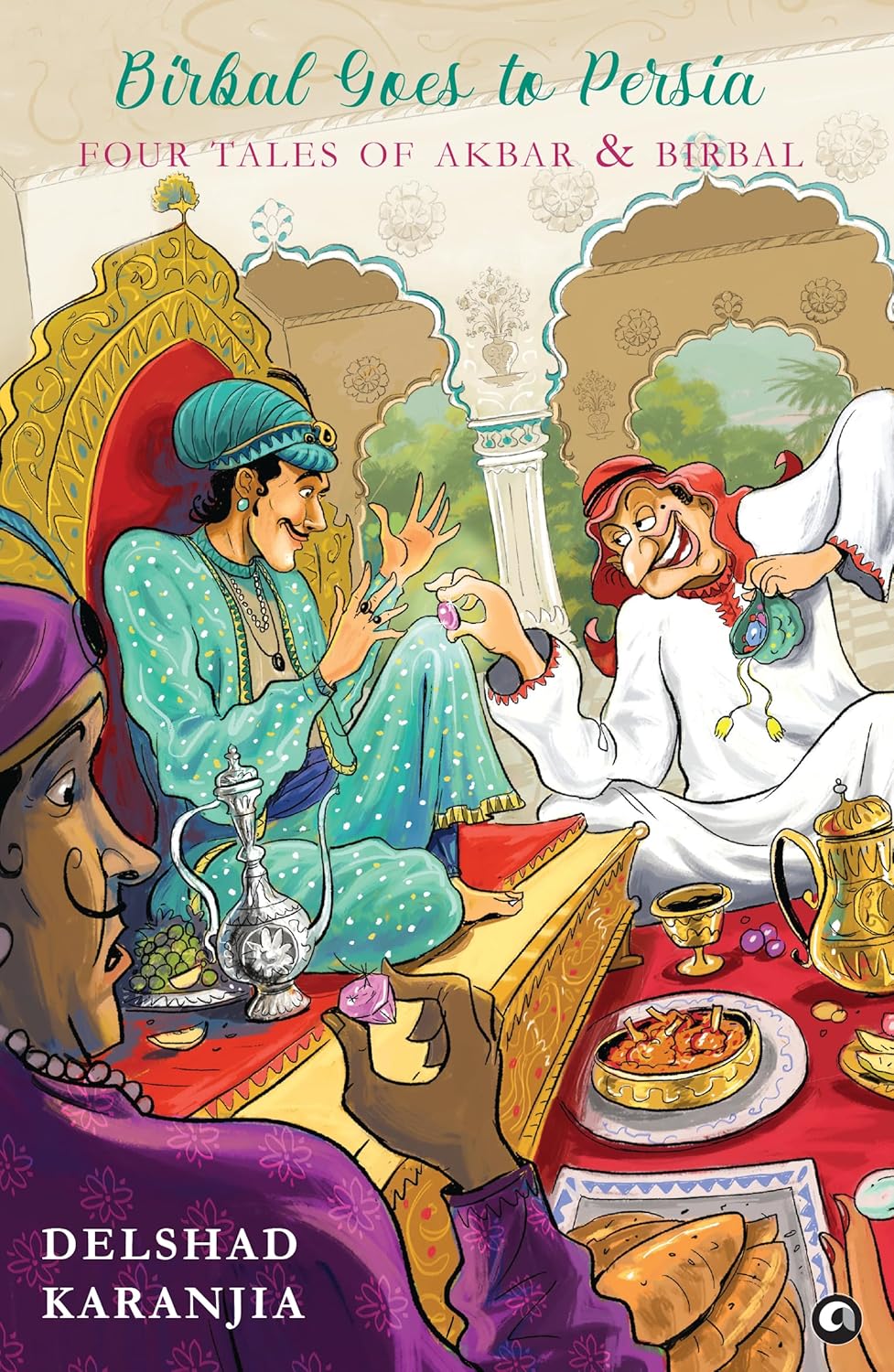
Birbal Goes to Persia: Four Tales of Akbar and Birbal by Delshad Karanjia (Book Review: 4*/5) !!!

2147th BLOG POST

14th Book of 2025 

I remember my father instilling the habit of reading books in me right from my primary schooling days. One of the most popular stories during those years was the Akbar-Birbal tales. I used to think that kids these days wouldn’t be reading about Akbar and Birbal, but I was pleasantly surprised when I found a few such books at one of my relatives’ homes. It took me just 20 minutes to complete this book titled “Birbal Goes to Persia,” which consists of four tales of Akbar and Birbal — all distinct from each other. The stories have been retold by Delshad Karanjia, who has been a journalist by profession.


All the stories are witty, funny, and humorous, and each provides a life lesson at the end. The first story in the book, A Lesson for the Emperor, tells a tale where Birbal gives a profound lesson to Akbar, making him realize that everything in life is temporary and that worldly possessions do not belong to anyone permanently, as every person is merely passing through Earth and must die one day.


The second story, Birbal and the Shah, is another example of Birbal’s cleverness, where he manages to impress both his own king as well as the ruler of another country by complimenting each of them in their respective presence — changing the perspective of his statements in both instances.


The third story, Catching Thieves, actually tells two different tales where Birbal faces the challenging task of finding a thief. He uses his intelligence and gives a task to the suspects, through which he cleverly identifies the real thief without conducting any formal investigation.


The fourth story, A Tax on Fools, serves as a fitting conclusion to the book. It narrates how Birbal challenges Akbar’s idea of imposing a tax on fools and, in turn, proposes imposing a tax on wise people instead. This was the first time I read this particular story, and I really liked it.


Overall, the book is engaging, and children are definitely going to enjoy it. I give it 4 stars out of 5.

PURCHASE THE BOOK HERE

Thanks!


WRITING BUDDHA