29 July 2022 | By: Writing Buddha

Fast But Lost by Dr. Pallavi Joshi (Book Review: 5*/5) !!!

2016th BLOG POST

19th Book of 2022
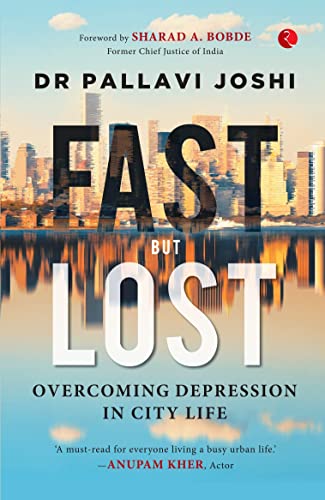


I have always been interested towards living an urban lifestyle. I remember how madly I wanted to be in a metro city when I was residing very well in a 2nd tier city which wasn’t much less than a metro city. Only after shifting to this competitive and fast lifestyle where if you don’t keep on progressing, you find yourself largely behind than all your friends and peers which starts affecting your personal as well as social life. Hence, I always love watching movies or reading books based on characters who are surviving with their up and down emotions in an urban setup. The same interest made me pick up this book of around 215 pages named “Fast but Lost” written by Dr. Pallavi Joshi. It also has the tagline which says “Overcoming depression in city life”.


To start with, I must say that the cover page of the book is very beautiful and specific to the topic. If not the title of the book, at least the cover page will surely make the readers give it a chance while roaming around in bookstores. Writing an all-and-all non-fiction book based on depression is a very scary and gutsy choice because we have so many psychiatrists, psychologists, therapists, doctors and even people like actors and social media influencers guiding us on this issue. It can become very challenging for the author to write without thinking about what would people say about her treatment and overcoming methodologies.


This book is an answer for every question you had about your anxiety, stress, depression, suicide and every related thought. It is a very well-planned book which speaks of every point in a very structured manner. Author ensures that you don’t get lost in big terminologies hence keeps the book simple without making it sound overwhelming to the reader even once. There were times when I cried or wept while reading few sections as it talked about emotions or moments I had gone through in my life and in few scenarios, I am literally going through them currently. Pallavi has ensured that she doesn’t miss even a single reason or trigger that causes depression so that any of us who pick the book find something for us in it. I am telling you covering all these aspects is not an easy task at all as it deals with various kinds of human emotions.


Joshi has nicely made us understand the most asked questions about difference between psychologist, psychiatrist, counselor and therapist as well as sadness, stress and depression very appropriately. Similarly, she has busted many myths related to depression in initial chapters itself which helps us clean our mind and learn everything she tells with an open mind. She also elaborates upon symptoms of depression that is surely going to make it easier for you to understand the type of depression you are going through. I really got emotional every time I read any section based upon patient’s case studies. I am glad author put it all so well.


My personal favorite has been the 4th chapter where author mentions each and every aspect which can cause us depression along with explanation, case study, solutions and when to go to a psychiatrist. Some of the discussed aspects are as follows: break-up, marital discord, infidelity, death of a loved one, exam stress, parenting, elderly care, job loss, infertility problems, diagnosis of terminal illness, sexual orientation etc. Dr. Pallavi has also made us go through the very popular talk therapy called CBT and the connection between situation, thoughts and reactions. She also explains other therapies as well. Author talks elaborately about suicide which was very necessary to be discussed. I was quite surprised to know that even suicide has its types. I am glad author has written this chapter as it has many information which can help you get away from suicidal tendencies and also make you equipped to help others going through the same feelings.


The book closes with the chapter on how lockdown and Covid scenarios made a great impact on people’s mental health. Author summarized the whole two years in few words but it was enough to trigger the emotions as each one of us have gone through this phase. Overall, I must say this is one of the most perfect self-help books I have ever read. I will recommend this to everyone. Please don’t let yourself feel alone. This book is going to be your first savior in the crisis. And yes, not only for the people from urban lifestyle, this book can be read by anyone residing anywhere doing anything and going through anxiety, stress, sorrow or depression. I give this book a perfect 5 out of 5 stars. I am just mesmerized and I would like to show my gratitude towards Dr. Pallavi Joshi for attempting this.


PURCHASE THE BOOK HERE


Thanks!


WRITING BUDDHA 


19 July 2022 | By: Writing Buddha

Are all our Good Decisions always taken by us?

2015th BLOG POST


I am currently reading a non-fiction which is about depression – majorly in urban cities where life just doesn’t have a pause button. There are several instances mentioned in the book which brought tears to my eyes. Many of them were because I felt I am going through the same pain, suffering or have dealt something similar in past. I kept the book aside at around 1 AM and started scribbling why do I feel a certain emotion at certain time. As it is said that writing is the best therapy anyone can have, I started feeling better after writing my pain-points and analyzing it. When I was going through my life, I saw that most of the bad things happened were chosen by others for me. Then I went onto another level of this flowchart and thought if I would have decided something else for myself if the decision was forced upon me.


Luckily, the answers for most of them were true – I would have chosen something else if I had the option to choose – either during my childhood days or higher academic options or relationships or other prominent landmarks in my life. Then I also started looking at good things that have happened to me. I started writing why did that happen at first place. I also started refactoring how did I come upon taking those decisions for myself if I wrote only my name against the event or achievement. Somehow, I realized that even that happened because either I got influenced while having conversation with someone or through some content I consumed through books/articles/movies/videos etc. Then I started removing my name against all these points and wrote the name of the influencer which made me take the decision that went right in my life.


Finally, I realized that nothing in life happens only because of us – our emotions, decisions, dreams, aspirations or actions. It is always either influenced, decided or suggested by someone. Maybe you won’t remember at the moment but subconsciously, your mind knows how did you reach a point where you took or rejected a decision/option. Though I believe that decision-making is a skill in itself and most people on topmost designation has no job but to only provide approvals for certain tasks that has risks involved in it. People from outside think that they have nothing much to do but in reality, the kind of decisions they take can make their company/product or its future into success or failure.


So, coming back to the topic, when I realized that, I started pondering over the fact that every time we are about to do something or make some decision, when the same set of people who have taken or influenced most of our decisions in our life are available, why do we ignore them or their take about us? Why do we feel that we shouldn’t let someone else take charge of our life? Even though they are just going to give their inputs because many of us don’t see ourselves as 3rd person but these people do. They know our level of capabilities, behavior, commitment etc. towards certain activities which relates to the progress or quality of our life. Sometimes, others are in better place to guide us than we, ourselves.


But when the same or certain thing goes wrong in our life where we didn’t include them in the decision-making process, they are the first people we run towards for help and guidance. We find solace in them. Even their presence and few words of affirmation for our future gives us comfort. We then realize our mistake of not including them while we were getting into this activity which had certain risk or failure involved. For e.g. when you find a partner, you never want to discuss that with your parents. Similarly, we keep turning down all the red flags raised by our siblings/friends because eventually, they end up knowing about it.


Later on, when we get a setback in our relationship, we run back to the same siblings/friends whom we considered jealous or less-informed about our emotions/choices. In case, the environment at home is moderate/liberal, we tend to cry hugging our parents or siblings. But what happens when we are getting into something as serious as this which can impact our emotional state later on? Why do we become so arrogant? What gives us the confidence that we are taking the best possible decision ever and it will never fail whatsoever? Isn’t this something we should consider when its eventually the people around us who help us get out of the rut we have trapped ourselves in?


The same scenario applies for everything – choosing our field of study, college, courses, job, job location, life-partner, hospital for delivery, job switching, purchasing a home, renting and the list keeps on going. When we end up realizing in any of these situations that we have screwed ourselves, we are ready to follow any advice given by our well-wishers. We give everything in their hands to do it for us just because we want to get out of the trap we have fallen into immediately. But the moment we are out again, we get back the same swag of playing with our life on our own terms. Where does this swag and terms go when everything gets lost in the race? Haha!


Life is funny and we are funnier. Life is shit then we are the ones shitting on it. It’s time to understand how we have reached wherever we are. If everything bad has happened due to others, even the good has happened because of others. These might be the same set of people or different but we are not the only ones who impact our life. There are always OTHERS who are involved in it – you like it or not. Now, how we have to handle the involvement of others – how much to include/exclude them – how much to take/not take their advice – is all upon us. But for that – we must know the set of people who have almost/mostly been right and wrong for us so that we can have our own set of board-of-directors kind of thing whom we consult every time we are trying to get into something which can impact our life largely. Best of Luck to you – hope you find your BoDs soon. 😊


Thanks!


WRITING BUDDHA 


17 July 2022 | By: Writing Buddha

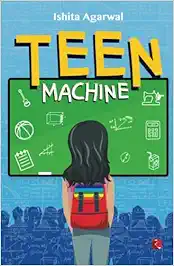
Teen Machine by Ishita Agarwal (Book Review: 3.75*/5) !!!

2014th BLOG POST

18th Book of 2022


Though I am in my early 30s but I feel that I am mentally in the same zone as I was in my late teen years. The number of challenges and anxiety I went through those years have still stayed with me and I believe it will stay till the last breath. Hence, whenever I find someone speaking or writing about their experiences of 11th-12th std where other students are giving their best with complete focus and we are going through dilemma about what should be chosen for the future, I just sit and listen to these people. I am someone who failed 11th standard twice and couldn’t pass it at all. I finally did my 12th privately without any college. Well, that’s the reason Ishita Agarwal’s new book “Teen Machine” attracted me.


The book is published by Rupa Publications in around 265-odd pages. The title of the book itself says so much. It reflects how teenagers have been conditioned to be less humane but more like machine – where they have to sit for competitive exams one after another with an expectation of not failing even once in their life. For parents, it is quite normal to make their child go through this process because they wish a good future for them. Unfortunately, for children/students, this becomes a traumatic and self-destructive process where they lose themselves on daily basis in this ultra-competitive and machinery world. Ishita has tried to reflect on what goes behind the Indian child’s brain who has to go through so much in the age when they should also be chilling a bit and figuring out things themselves.  


Through the character of Avani, author has ensured that we can relate to the pain and struggle of a girl who has been good in her school days but finds this whole environment and set-up of 11th std quite challenging and out-of-the-world. She is unable to identify with the same classmates who were with her until 10th std. Everyone’s stance has changed and she has to adapt to this new culture where classmates are only talking about studies, doubts, exams and results whereas she wants to gel with others on human level.


Ishita has given significance to the fact how it hits you first when you realize you won’t be going to school anymore but the coaching classes are going to be your new home. She tells how even after the long-running coaching, students are expected to invest minimum 6 hours of self-study daily. Even the group they chose needs to be a study group among whom doubts and studies can be discussed. Author also focuses on the hormonal changes that happens during this age when you start liking someone and get infatuated. Though I am glad that author didn’t insert too much love-angle and cheesy conversations in the story. She limited this angle quite intelligently to not make this a chick-lit stuff.


How parents become judgmental towards their children during this phase is nicely portrayed through Avani as well as Avik’s character. I liked how Ishita also showed the behavioral changes of both- mother and father where the loving one takes up a hunter well as an aggressive parent becomes caring during this phase. Ishita focuses on how academic results start showing up when a child removes all the negative opinions, thoughts and inferiority complex away and only focuses on self-improvement and stop lying to themselves about their investment in studies and towards their goal.


The characterizations done in this story is perfect as you could relate with each of them. The depth shown with Avani’s character is also commendable as you get to understand her internal thoughts as well as her external actions during any scenario. The narration is simple which makes it easy for you to finish this book within one or two sittings. I liked the climax of the book as it tells you a lot about life in particular which is so true at any age. The only drawback that I could sense while reading this book is keeping the character’s challenges only towards academic. This is the age when children also get distracted by several other things which becomes a hindrance towards studies – which I believe should have been included – if not with protagonist, then with any other character in the story. I felt the plot to be too straight-forward and linear.


Overall, this is a book which needs to be read by children after their 9th std so that they understand how to channelize their emotions to get the academic results as well as maintaining mental peace. Also, this is as much effective for parents in order to understand how to mould their child with love rather than judgments. I give this book 3.75 stars out of 5.


PURCHASE THE BOOK HERE


Thanks! 


WRITING BUDDHA