6 July 2022 | By: Writing Buddha

A Dangerous Mind: Consciousness Belongs to God by Golam Maula (3.75*/5) !!!

2010th BLOG POST

14th Book of 2022
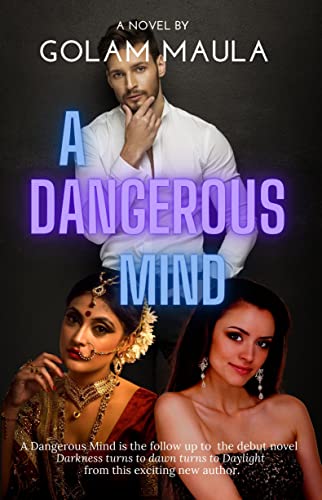


I finally got a Kindle for myself this year and I was looking forward to read a completely new author’s book on it which has been released in Kindle edition only. After searching a lot, I choose to read Golam Maula’s A Dangerous Mind as my first Kindle book. It also has a tagline that says “Consciousness belongs to God”. This 356-pages book is quite a ride as author takes you on a journey which has a plot with many twists and turns. Though it is not a thriller but author manages to keep changing the theme of the story after every few chapters which keeps you interested and excited to know what’ll happen next. The book is quite a good page-turner which will make you finish it within 2-3 sittings itself; though it took little more time for me to complete due to my first Kindle reading experience.


Author’s writing style is cool – yes, I am using this term to define the way he writes because it makes you feel that you aren’t reading a book but watching it on a big screen. The narration is fast-paced and doesn’t bore you as author keeps his characters on toes always. Generally, as a reader, when you complete the first 50 pages of a book, you are able to guess on what tone the story will move ahead but here, I would really like to applaud author for choosing to write in a manner where you feel that you have read not one but many stories in a single book itself. The characterizations of both the main protagonists- John and Anjali is done so perfectly despite the fact that their background is from two different countries – US and India. I was quite impressed with the way their aesthetics and beliefs are portrayed in the book which makes you understand them so well that you feel you already know them.


The book starts quite romantically which made me imagine it all in a very Bollywood-ish manner – a boy trying to search a girl whom he found at a temple praying but her beauty mesmerized him. Then they keep on bumping or meeting each other at some places after which they finally get to have a conversation and know each other. The instant liking makes both of them fall in love. Till here, I really enjoyed how author defined the emotions of a boy who wants to get to the talking terms with the girl he has got attracted towards. Their initial conversations also make you fall in love with the characters and imagine yourself in a beautiful relationship.


Now, the tone of the book shifts again and author gives prominence to the casteism and belief system of parents and its impact on the children - How marriages are not seen as compatibility and love of two people for each other but it is made more about what castes they belong to. The whole struggle of the two characters will make you resonate with their pain as many people in our country go through this issue and end up suffering emotional damage for a long time because of losing someone for no reason at all just because they belonged to two different castes. The characters of parents are also nicely crafted which makes you understand where they are coming from and why they are so hell bent over their decision.


The main power of Golam’s writing gets revealed when the story proceeds after this where John meets an accident where some revolutionary medical experiment is performed on his treatment which changes his mind, his life and his perspectives forever. He is being referred to as the most intelligent person on the planet. He also ends up losing memory which keeps on coming back and losing again periodically. Now, in such scenarios, when Anjali finds John in a completely different zone and mindset, the real test of their relationship begins where she tries all her efforts to keep it up but John’s memory loss makes him explore life very differently. Here, I started imagining everything in quite a Hollywood-ish way which is a completely contrast to the first half of the book which I mentioned was quite Bollywood-ish till then.


I liked how Maula used philosophical aspects where there are many colours of life being explained through characters in their conversations. I liked one section in the 2nd half of the book where John is reading Anjali’s diary paragraph by paragraph and she is explaining her point of view about why she wrote it and how things have changed since then. The climax is quite painful but predictive as I had guessed somewhere in middle of the story what would happen with the characters later on.


Now talking about the drawbacks- firstly, this is quite a lengthy book which I believe could have been cut short by 25% of its total length with good editing. Secondly, I believe author got quite preachy at places when he talks about religion, faith and other such aspects which somewhere makes you find Anjali’s character quite boring at times. Thirdly, the word “Ardhangini” is used so many times in the book to prove how serious and beautiful relationship a marriage is that you would want to give divorce finding this concept being pushed every once in ten pages.


Other than this, I believe author has done quite good research to make the whole medical scenario of John look natural. Similarly, his efforts to know about India, its culture, belief and religion is evident otherwise it’s not easy to describe the whole country and its people the way Golam Maula has done. I give this book 3.75 stars out of 5.


P.S. This book has been awarded the best novel of the year 2022 by APS Book Awards in Chicago, USA.


PURCHASE THE BOOK HERE


Thanks.


WRITING BUDDHA 


5 July 2022 | By: Writing Buddha

JNU: Nationalism and India's Uncivil War by Makarand R. Paranjape (Book Review: 4.5*/5) !!!

2009th BLOG POST

13th Book of 2022


I don’t generally read books which are written on very heavy topics or are too historical or contains stuff that might make more than 50% of the book not comprehendible to me. Hence, I never pick up such pieces in either of the genres- fiction or non-fiction. Luckily, there are few topics which are of such character that you wish to know about them – either because of curiosity or to understand what exactly happened which made it so famous or relevant. One such topic for me has been about JNU – the college, what happens in its premise and what is the reason that makes the environment there so political and leftist rather than academic. I had no idea about the institution until 2016 until we know how a boy named Kanhaiya Kumar launched an agitation which became the talking point country wide; well, in international media too. I just completed reading the book named “JNU: Nationalism and India's Uncivil War” written by one of the oldest and prominent professors from the same university, Makarand R. Paranjape.


I am ashamed of myself that I didn’t hear his name or got to know about his stance against the Leftist crowd and particularly, Kanhaiya Kumar. It is only through this book that I went online and checked a lot of content which involved the author. This 270-odd pages book published by Rupa Publication is a combination of two aspects – Paranjape's memoir as an insider and personal journey at JNU and his stance and opinion on the activities that takes place in the JNU premises which gives it enough negative limelight. The book starts from his own journey – how he joined JNU and what made him leave IIT and move to this place which is always full of controversies and is completely different from what IIT offers. Then, author takes the story forward and explains how he got involved in the JNU row.


There is an extensive chapter where author shares a lot of open letters and how he responded to them vs how his responses were accepted. It is fun and exploratory to understand the viewpoints and opinions of both the sides – left and right and try gauging ourselves which side we want to stand with. It makes you question a lot of things – if favouring state and system completely is good or going extremely against them and bringing things on standstill a right choice. Author tries to give us a deep account of how typical JNU crowd thinks, what they need, what they do to get what they need and what is their agenda behind this. Everything that author mentions are highly debatable and controversial. You will definitely find complete support to this piece of work or a complete disregard- there's not going to be a normal reaction though author keeps insisting that he falls somewhere in between the left and right wing of our nation.


In a chapter, author gives a nice brief of the lives of Tagore and Gandhi – as their professional work and personal opinions at times stood completely with nation or it questioned the moral of the state. I really enjoyed reading this as I never knew much about Tagore’s various aspects of work and his opinions about our country. Few things really opened my eyes towards the history of our nation and how we have always been handling the extreme opinions and standing tough with all these voices roaring around us. Author speaks of how JNU has also produced great alumni's like Nirmala Sitharaman, S. Jaishankar, Abhijit Banerjee etc. and raises an expectation as well as question if JNU will produce such likeminded productive and nation-builders in the future considering its current opinionated and politically-influenced crowd. 


Author doesn’t shy away from narrating how JNU students run away from studies and want to protest on meagre issues even when it is something like rise in fees by some hundred-odd rupees or mandatory 75% attendance rule etc. He tells how students want the institution to be closed or lecture not happening for more than half of the year hence they find some issue to revolt against and ensure the whole attention is towards the same than studies. Lastly, author discusses how JNU can be further saved from such toxic and extremist culture and what needs to be done to make it an institute that can bring change and reform to our country in a positive manner and gets mention for great things happening than the reasons why it is currently mentioned regularly. Author’s hope and genuine care towards the institution is evident in every sentence that he’s written. The research work and documentation of all the JNU events since 2016 displays the hard work author has put to give this book a proper shape. 


Overall, if you have always questioned about JNU, leftists, anti-nationals, tukde-tukde gang and what the whole 2016 azadi slogans were all about, you should definitely pick this book up which has an equally sensational cover page. For a beginner, the language is tough as there are instances where you’ll have to refer to dictionary 7 times in just one sentence. Haha! So, pick it only if you have been reading journalism content since a long time and have good vocabulary prowess. I loved deep-diving into this complicated and controversial subject through Makarand Paranjape’s lenses. I give this book 4.5 stars out of 5. I have learnt a lot about the other side which I was looking forward to know since long.


PURCHASE THE BOOK HERE  


Thanks!


WRITING BUDDHA 


22 June 2022 | By: Writing Buddha

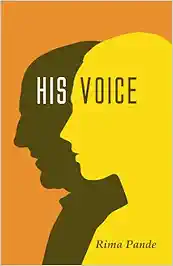
His Voice by Rima Pande (Book Review: 4.25*/5) !!!

2008th BLOG POST

12th Book of 2022


Not every time you pick up a book which can take you through several emotions. One such book I completed reading last month is “His Voice” written by Rima Pande and published by The Write Place publishers in around 160-odd pages. This is a daughter’s ode to her father where she speaks in his voice to tell the story of a man who has struggled with physical issues for almost 2 decades out of which last two years has been under paralysis – the situation where he can see and feel things but can’t express himself. Author, Rima Pande, has grabbed this vacuum and tried to give his expression the voice she always could see in his eyes. I understand that just by knowing the theme of this book there must be a lump in your throat – the reason why I started my review with that sentence.


Rima Pande’s writing is very Indian – when I say this – I mean to say that she is completely desi by heart and therefore everything she observes or mentions about her father’s life has a lot of emotions, love, respect, sympathy, empathy, tribute attached to it. You can understand the kind of passion with which she describes everything about what her father is feeling about his deteriorating health, his wishes, his helplessness, his pain to see his caregivers giving their all to keep him well. I could relate very well with her with respect to where she is coming from. The narration is very nicely managed as I thought author would talk only about his disease but the way book takes us through two different timelines- right from the protagonist’s early life to the current scenario keeps the interest alive. I love reading books written in this format.


The story teaches you a lot about gratitude – every page and sentence reflect how it would have been if we were in Agastya’s situation and seen life through his lenses. You start appreciating your health, family and everything you have received in life. Similarly, you start finding positivity everywhere. You understand that there could have been worse than this. You start understanding how life works. It always gives you the best you deserve- it is just about realization which this book makes you recognize and embed in your attitude. Author also pinpoints through her narration about the game of patience. How tough it is to keep waiting for results with a hope that things would get better. Being patient is challenging but eventually, it gives you the path that you need to reach the destination.


It is tough to guess where author is speaking in fictional tone and where she is talking about the real suffering of the character – and that’s the beauty of the book because it makes your imagination create a lot of mind maps and think what if this must have really happened with someone. In Indian culture, family and the bond between its members is one of the most celebrated things which has almost been taken granted these days as the lifestyle has started becoming busy and self-centered. Author’s pen makes you feel love and concern for your parents as well as other family members too. You understand how their presence is subconsciously keeping our mental health in check.


Author says that even if you don't read the book, please call your parents. Don’t wait, don’t hesitate, don’t postpone, don’t judge, just call. Call them today - and listen, for as long as they want to speak to you. And be there when they need you - physically and emotionally. Don’t wait till they need a caregiver. Connect, don’t regret it. This is enough for you to understand the reason behind why author went ahead and took this tough decision of going through the pain and suffering she saw her father go through for years again. This book needs to be read specifically by all the youth below 45 age who end up ignoring parents for career, friends and goals. I give this book 4.25* out of 5. I wish author keep writing to make the readers realize what actually needs to be prioritized in life.


PURCHASE THE BOOK HERE


Thanks.


WRITING BUDDHA